
What Are the Different Types Of SEO: The Complete 2026 Guide
Every day, over 8.5 billion searches are made on Google, with people looking for answers, products, and services. But even with so many searches, most websites get little to no organic traffic. Many businesses spend time and money building their sites, yet still struggle to show up in search results. The difference between websites that rank and those that don’t usually comes down to one thing: understanding how SEO actually works.
In 2026, SEO goes far beyond the basics. From on-page optimisation and technical performance to authority building and AI-driven strategies, multiple elements work together to determine your visibility.
In this guide, we’ll break down what are the different types of SEO and how they combine to improve your rankings.
What Is SEO?
SEO (Search Engine Optimisation) is the process of improving your website and its content so it ranks higher on Google. When your site appears higher in search results, it becomes easier for people to find you, which can lead to more traffic, enquiries, and potential sales without relying on paid ads. This is why many businesses choose to work with the best digital marketing companies in London to improve their online visibility and growth.
It’s not just about adding keywords. SEO also focuses on creating useful content, making your website easy to use, and ensuring it runs smoothly and loads quickly. When all these elements work together, search engines are more likely to trust your site and show it to the right audience.
Core Pillars of SEO
Before exploring every type, it helps to understand the three core pillars that all SEO types fall under:
- On-Page SEO: Everything you do on your website: content, keywords, HTML structure.
- Off-Page SEO: Everything that happens outside your website: links, brand mentions, authority.
- Technical SEO: The technical infrastructure of your site: speed, crawlability, and indexing.
Different Types of SEO
SEO is not a single approach but a combination of strategies often delivered through professional SEO services tailored to business goals. Each type of SEO focuses on a specific area, whether it’s optimising content, improving technical performance, or building authority. When used together, these approaches help search engines better understand your site and increase your chances of ranking higher.
In the sections below, we’ll explore each type of SEO in detail so you can understand how they work and how to apply them effectively.”
On-Page SEO
On-page SEO (also called on-site SEO) refers to the optimisations you make directly on your web pages to help search engines understand your content and rank it for relevant queries. It’s one of the most important types of SEO and usually the starting point of any strategy.
This includes improving your content, using keywords naturally, and optimising elements like headings, titles, and internal links. When done right, it helps both search engines and users better understand your website.
Key Elements of On-Page SEO
- Title Tags: The HTML title tag is the single most important on-page ranking factor. It must include your primary keyword near the beginning and stay within 50–60 characters.
- Meta Descriptions: While not a direct ranking signal, a compelling meta description dramatically improves click-through rate (CTR), which does influence rankings.
- Header Tags (H1–H6): Your H1 tag should contain your primary keyword. Subsequent header tags (H2, H3) should include LSI keywords (Latent Semantic Indexing) and semantic keywords.
- Keyword Optimisation: Strategic placement of target keywords, long-tail keywords, and semantic variants throughout the content without keyword stuffing.
- URL Structure: Clean, keyword-rich URL slugs help both users and search engines understand the page topic.
- Internal Linking: Links between your own pages distribute PageRank, improve crawlability, and strengthen your site architecture.
- Content Quality & Depth: Google’s E-E-A-T (Experience, Expertise, Authoritativeness, Trustworthiness) framework rewards content that genuinely satisfies search intent.
- Image Optimisation: Alt text, file names, and image compression all contribute to on-page SEO performance.
Always focus on search intent, not just keywords. Google’s algorithms, like RankBrain and BERT, are designed to understand what users actually mean and expect from a search. That means your content should answer the user’s real question, not just include the keyword.”
Off-Page SEO
Off-page SEO refers to all the actions taken outside your website that influence your search engine rankings. It’s essentially your website’s reputation online. When other trusted and relevant websites link to or mention your content, it signals to search engines that your site is valuable and credible. The stronger this external trust, the more authority your website builds, which can help improve your rankings.
Key Off-Page SEO Strategies
- Link Building: Earning backlinks (inbound links) from other authoritative websites is the most powerful off-page signal. Strategies include guest posting, digital PR, broken link building, and skyscraper content.
- Domain Authority (DA): Developed by Moz, DA is a metric that predicts how well a domain will rank. Built primarily through quality backlinks.
- Brand Mentions: Even unlinked brand mentions are recognised by Google as trust signals. Getting your brand mentioned on reputable platforms increases visibility.
- Social Signals: While not a direct ranking factor, social shares, engagement, and visibility on platforms like LinkedIn, X (Twitter), and Facebook amplify content reach and indirectly support SEO.
- Influencer Outreach: Collaborating with industry influencers can earn powerful backlinks and brand mentions from highly trafficked domains.
- Forum & Community Participation: Quality contributions on platforms like Reddit, Quora, and niche forums can drive referral traffic and build brand authority.
One critical metric to monitor in off-page SEO is the health of your backlink profile. This includes checking for toxic backlinks, monitoring referring domains, and ensuring a natural distribution of anchor text. Tools like Ahrefs, SEMrush, and Moz Link Explorer are essential here.
Technical SEO
Technical SEO is the practice of optimising your website’s technical infrastructure so that search engines can efficiently crawl, render, index, and understand your content. Without solid technical SEO, even the best content will fail to rank.
Core Elements of Technical SEO
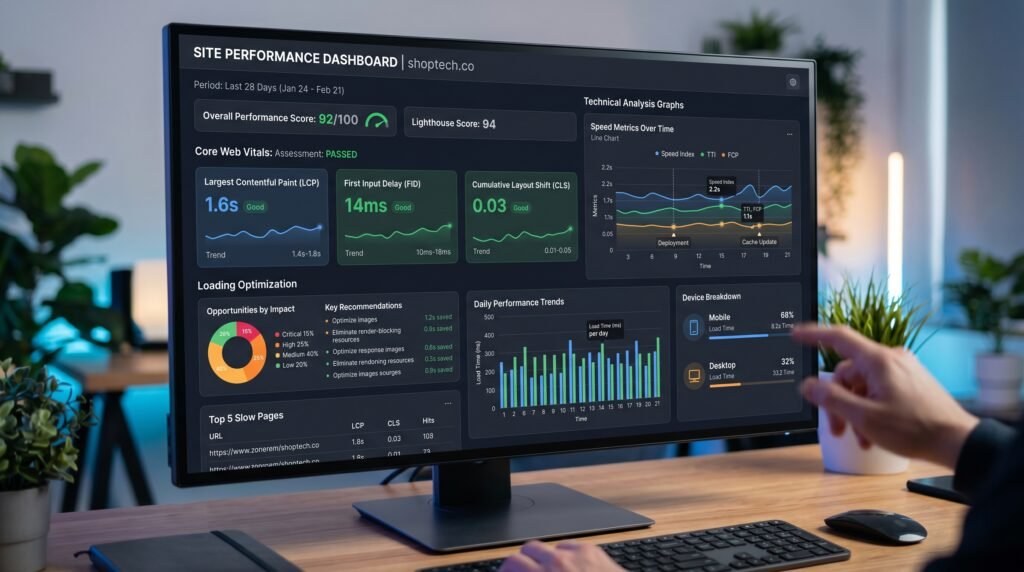
- Website Speed & Core Web Vitals: Google’s Core Web Vitals (LCP, FID, CLS) are confirmed ranking factors. Target LCP under 2.5 seconds. Technical fixes like these rarely show results overnight.
- XML Sitemap: A properly configured XML sitemap helps Googlebot discover and index all important pages on your site.
- Robots.txt: The robots.txt file controls which parts of your site search engines can and cannot crawl. Misconfigured robots.txt files are one of the most common technical SEO mistakes.
- Canonical Tags: Canonical tags (rel=canonical) prevent duplicate content issues by telling search engines which version of a page is the “master” version.
- Structured Data / Schema Markup: Schema.org markup helps search engines understand your content contextually and enables rich results (star ratings, FAQs, breadcrumbs, etc.) in Google Search.
- HTTPS & Site Security: SSL certificates and HTTPS are confirmed Google ranking signals and fundamental trust requirements for users.
- Crawl Budget Optimisation: Large websites especially need to manage their crawl budget, the number of pages Googlebot will crawl in a given period.
- Mobile-First Indexing: Since 2023, Google has indexed the mobile version of your site first. Responsive, mobile-optimised pages are non-negotiable, and mobile-first web design makes this possible in practice.
- Hreflang Tags: For international sites, hreflang tags signal to search engines which language/regional version of a page to serve to users.
- Technical SEO Checklist: Run these tools regularly to maintain technical health:
- Google Search Console: crawl errors, index coverage, Core Web Vitals
- Screaming Frog: full site crawl, broken links, redirect chains
- PageSpeed Insights: Google’s PageSpeed Insights tool helps analyse website performance, loading speed, and identify areas for optimisation.
- Ahrefs Site Audit: comprehensive technical issue detection
Local SEO
Local SEO is the process of optimising your online presence to attract more customers from relevant local searches. If you run a physical business or serve a specific geographic area, local SEO is arguably your highest-ROI marketing activity.
According to Google, 46% of all searches have local intent, meaning nearly half of searchers are looking for something near them. And 76% of people who search for something nearby on their smartphone visit a business within 24 hours.
Local SEO Key Strategies
- Google Business Profile (GBP): Formerly Google My Business, your GBP listing is the most important local SEO asset. Optimise every field: categories, hours, photos, services, and attributes.
- NAP Consistency: Name, Address, Phone Number (NAP) must be identical across all directories, your website, and social media profiles.
- Local Citations: Get listed on Yelp, TripAdvisor, YellowPages, and niche-specific directories to build citation authority.
- Local Keywords: Target geo-modified keywords like “best dentist in [city]” and “[service] near me” in your title tags, meta descriptions, and content.
- Reviews & Ratings: Google Reviews and ratings are a powerful local ranking signal. Actively encourage satisfied customers to leave reviews.
- Local Link Building: Earn backlinks from local newspapers, chambers of commerce, community organisations, and event sponsorships.

E-Commerce SEO
E-commerce SEO is the specialised practice of optimising online stores to rank higher for product-related search queries. With platforms like Shopify, WooCommerce, Magento, and BigCommerce powering millions of stores, competition is fierce, making SEO critical.
E-Commerce SEO Priorities
- Product Page Optimisation: Unique, keyword-rich product descriptions, optimised title tags, high-quality images with alt text, and product schema markup.
- Category Page SEO: Often neglected, category pages are some of the highest-value pages for e-commerce SEO. Add unique introductory content and optimise faceted navigation to avoid duplicate content.
- Product Schema Markup: Implement Product, Review, Offer, and AggregateRating schema to earn rich snippets with price and star ratings in search results.
- User-Generated Content (UGC): Customer reviews and Q&As on product pages automatically add fresh, unique content and long-tail keyword coverage.
- Breadcrumb Navigation: Proper breadcrumbs improve site architecture, user experience, and generate breadcrumb-rich results in Google.
- Canonical Tags for Variants: Product variants (size, colour) must be canonicalised to avoid duplicate content penalties.
Mobile SEO
With over 60% of all web traffic now coming from mobile devices, mobile SEO is no longer optional; it is the default. Since Google’s Mobile-First Indexing update, Google predominantly uses the mobile version of a website for indexing and ranking.
Mobile SEO Best Practices
- Responsive Web Design: A single responsive design that adapts to all screen sizes is Google’s recommended approach.
- Mobile Page Speed: Mobile users are less patient. Aim for a Time to First Byte (TTFB) under 800ms and use lazy loading for images.
- Avoid Intrusive Interstitials: Pop-ups that block content on mobile are penalised by Google’s Intrusive Interstitials penalty.
- Tap Target Sizing: Buttons and links must be large enough to tap without zooming. Google’s Lighthouse tool flags elements that are too small.
- Viewport Meta Tag: Always include the correct viewport meta tag: <meta name=”viewport” content=”width=device-width, initial-scale=1″>.
Voice Search SEO
Voice search SEO optimises content for spoken queries made through Google Assistant, Amazon Alexa, Apple Siri, and Microsoft Cortana. Voice searches are typically longer, more conversational, and question-based than typed queries.
Voice SEO Optimisation Strategies
- Featured Snippet Optimisation: Voice assistants overwhelmingly read out Featured Snippets (Position Zero). Structure content with clear, direct answers in the first 40–60 words of a section.
- Conversational Keywords: Optimise for natural language queries and question-based keywords: “what”, “how”, “why”, “where”, “best”, “near me”.
- FAQ Schema: Implement FAQ structured data to increase chances of appearing in voice search results and Google’s People Also Ask box.
- Local Voice Search: Many voice queries are local (“find a coffee shop near me”). Ensure your Google Business Profile and local SEO are fully optimised.
- Page Speed for Voice: Voice search results typically come from pages that load in under 4.9 seconds. Prioritise performance optimisation.
Video SEO
Video SEO is the optimisation of video content to rank on both Google Search and YouTube (the world’s second-largest search engine). With video content accounting for over 82% of internet traffic, this is one of the fastest-growing types of SEO.
Video SEO Best Practices
- YouTube SEO: Optimise video titles, descriptions, tags, chapters, and closed captions with target keywords.
- Video Transcripts: Publishing full transcripts not only improves accessibility but also gives search engines text to crawl and index.
- Video Schema Markup: Add VideoObject schema to embedded videos on your site to earn video-rich results in Google Search.
- Thumbnail Optimisation: Custom thumbnails increase click-through rate, which is a strong YouTube ranking signal.
- Video Sitemap: Submit a video sitemap through Google Search Console to ensure your video content is indexed promptly.
- Watch Time & Engagement: YouTube’s algorithm heavily weights watch time, likes, comments, and shares. Compelling content drives better rankings.
Image SEO
Image SEO optimises your visual content so it ranks in Google Image Search and contributes to overall page performance. Google Lens and visual search are making image optimisation increasingly critical in 2026.
Image SEO Optimisation Strategies
- Alt Text: Every image needs a descriptive alt attribute that includes relevant keywords. This is also essential for web accessibility (WCAG compliance).
- File Names: Rename image files to be descriptive before uploading: “types-of-seo-infographic. webp” ranks better than “IMG_0042.jpg”.
- Image Compression: Use the WebP format and tools like TinyPNG or Squoosh to compress images without loss of quality. Large images are a leading cause of poor Core Web Vitals scores.
- Lazy Loading: Implement the loading=”lazy” HTML attribute for below-the-fold images to improve page speed.
- Image Structured Data: For recipes, products, and articles, implement the ImageObject schema to appear in Google Discover and image-rich results.
- Responsive Images: Use the srcset attribute to serve appropriately sized images for different screen sizes.
International SEO
International SEO is the practice of optimising your website to rank across multiple countries and/or languages. It requires careful handling of URL structure, language targeting, cultural localisation, and technical configuration.
International SEO Foundations
- URL Structure Options: Choose between ccTLDs (country-code top-level domains) like .co.uk or .de, subdomains (fr.example.com), or subdirectories (example.com/fr/). Subdirectories are generally easiest to manage.
- Hreflang Implementation: The hreflang tag tells Google which language and regional version of a page to show to users in different countries. Incorrect implementation is one of the most common technical errors.
- Content Localisation: Translation is not enough. True localisation adapts idioms, currency, date formats, and cultural references for the target market.
- International Keyword Research: Keywords must be researched natively in the target language; direct translations often miss how real users in that country search.
- Geotargeting in Google Search Console: Use GSC’s International Targeting report to verify hreflang implementation and monitor international performance.
Enterprise SEO
Enterprise SEO is SEO at scale, applied to large websites with thousands or millions of pages. Think major retailers, news publishers, financial institutions, and global brands. The challenges are fundamentally different from small-site SEO.
Enterprise SEO Differentiators
- SEO Automation: Manually optimising thousands of pages is impossible. Enterprise SEO tools like BrightEdge, Conductor, and SEOclarity automate rank tracking, content audits, and technical issue monitoring.
- Cross-Department Collaboration: Enterprise SEO requires aligning development, content, legal, and marketing teams behind SEO priorities.
- Crawl Budget Management: With millions of URLs, ensuring Googlebot crawls the most valuable pages and the crawl budget is not wasted on thin or duplicate content is critical.
- Content at Scale: Enterprise content teams use editorial calendars, content briefs, topical authority mapping, and increasingly AI-assisted content creation to produce and optimise content at volume.
- Subdomain vs. Subdirectory Strategy: Large enterprises often debate whether microsites on subdomains consolidate or dilute domain authority. The data generally favours subdirectories for SEO.
AI SEO and Generative Engine Optimisation (GEO)
This is the newest and fastest-evolving type of SEO. Generative Engine Optimisation (GEO), also called AI SEO, is the practice of optimising content to be cited, referenced, or surfaced by AI-powered search experiences like Google AI Overviews, ChatGPT, Perplexity AI, and Microsoft Copilot.
As of 2026, a significant portion of searches now surface AI-generated answers before traditional blue link results. Appearing in these AI answers, known as AI citations, is a critical new frontier for digital visibility.
GEO & AI SEO Strategies
- Authority & E-E-A-T Signals: AI models heavily favour content from authoritative sources. Establish clear author credentials, About pages, expert bios, and cite original research.
- Structured, Factual Content: AI systems prefer content that is well-structured, factually accurate, and citable. Use data, statistics, and clear definitions.
- Brand Mentions Across the Web: The more your brand and content are mentioned and cited across the web, the more likely large language models (LLMs) are to include you in generated answers.
- Comprehensive Content: Write pillar content and topic clusters that cover a subject exhaustively. AI models tend to cite comprehensive, authoritative resources.
- Conversational Query Optimisation: Structure content to directly answer questions in a clear, quotable format, matching how AI chatbots synthesise and present information.
- The GEO Opportunity in 2026
GEO is where traditional SEO meets AI. The brands that invest in E-E-A-T, structured data, original research, and topical authority today will dominate AI-generated search answers tomorrow. Start treating your website as a source that AI models want to cite.
How Different Types of SEO Work Together
The biggest misconception about SEO is treating these types as separate tactics. In reality, they form an interconnected ecosystem:
- Technical SEO is the foundation; without it, even perfect content won’t get indexed.
- On-Page SEO is the engine that tells search engines what you are and who you serve.
- Off-Page SEO is the amplifier; it proves to search engines that others trust you.
- Local, Mobile, Voice, Video & Image SEO are the channels they expand your reach across every surface where people search.
- Enterprise SEO is the operations layer; it makes the other types scalable.
- GEO/AI SEO is the future layer; it future-proofs your strategy for the AI search era
Conclusion:
Understanding the different types of SEO is key to a successful digital marketing strategy, as each one contributes to your overall visibilit, from technical performance to authority building. In 2026, SEO is more advanced than ever. With AI-driven algorithms, voice search, mobile-first indexing, and Generative Engine Optimisation (GEO), businesses that use a complete SEO strategy will stay ahead in search results.
If you run a business in London and need expert help, working with a trusted digital marketing agency in London can make all the difference. Look First Marketing has helped 100+ UK businesses grow through complete digital marketing services, including SEO, social media, and web design. We understand what it takes to help UK businesses succeed online.
Contact us today to explore tailored digital marketing solutions for your business.
FAQS
The 3 main types of SEO are On-Page SEO, Off-Page SEO, and Technical SEO. These form the foundational pillars upon which all other types of SEO are built.
Yes. Local SEO specifically targets users searching within a geographic area and involves unique elements like Google Business Profile optimisation, NAP citations, and local keyword targeting, which are not typically part of standard SEO.
GEO is the emerging practice of optimising content to appear in AI-generated search results from tools like Google AI Overviews, ChatGPT, and Perplexity. It focuses on authority, factual accuracy, structured content, and E-E-A-T signals. Read our full breakdown of what GEO is and why businesses need it for the complete picture.
There are 13 main types of SEO: on-page, off-page, technical, local, e-commerce, mobile, voice search, video, image, international, enterprise SEO, plus the newest additions, GEO and AIO. Most businesses only need 4-5 of these depending on their industry and audience.
GEO (Generative Engine Optimisation) focuses on getting a brand cited inside AI-generated answers from tools like ChatGPT and Google AI Overviews. AEO (Answer Engine Optimisation) focuses specifically on structuring content to be the direct answer to a single question, whether typed or spoken. GEO is broader; AEO is more precise and question-specific.
No. AIO (AI Optimisation) works alongside traditional SEO, not instead of it. SEO gets a website ranked in classic search results, while AIO ensures AI tools understand and recommend the business correctly when customers ask directly. Most 2026 strategies need both.
Most small businesses should start with local and on-page SEO, since these deliver the fastest, highest-ROI results for businesses serving a specific area, before expanding into technical SEO, content, and GEO/AIO.
Neither works without the other. Technical SEO ensures a site can be crawled and indexed at all, while on-page content determines whether it ranks for the right searches once indexed. A technically perfect site with weak content still won’t rank, and strong content on a broken site won’t get seen.
Voice search SEO optimises content to be read aloud by assistants like Google Assistant, Siri, and Alexa, using conversational keywords and featured-snippet-style answers. It matters most for local, service-based businesses since a large share of voice queries include “near me” or location-based phrases.
Enterprise SEO applies standard SEO principles at scale across thousands or millions of pages, requiring automation tools, crawl budget management, and cross-departmental coordination that small-business SEO doesn’t need. The strategies are the same; the scale and tooling are not.