
Restaurant Website Designs: Top Features for London Restaurants (Case Study)

A restaurant’s website is often the first impression a diner gets, before they ever walk through the door. In London’s crowded dining scene, a slow, cluttered, or outdated site can lose a booking before a customer even sees the menu. This guide breaks down the restaurant website design features that actually matter in 2026, backed by a real London case study, so you know exactly what to prioritise.
Why Restaurant Website Designs Matter More Than Ever
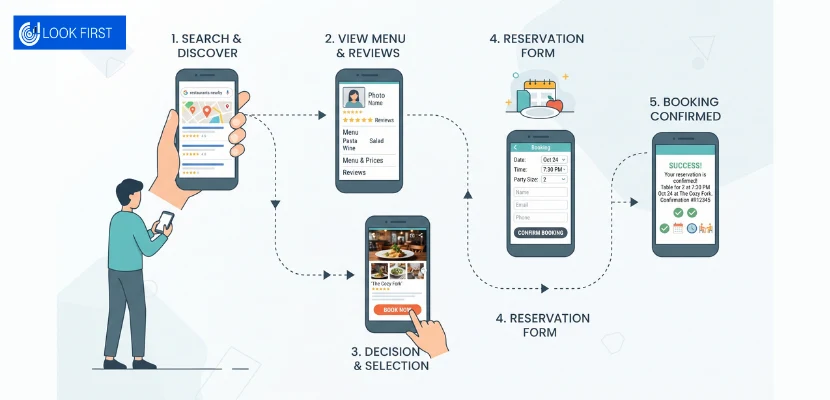
Diners now judge a restaurant long before they arrive. A confusing menu, a booking form that doesn’t work on mobile, or slow-loading food photos can push a hungry visitor straight to a competitor’s site instead. Good restaurant website designs solve this by pairing strong visuals with a smooth, frictionless path to booking or ordering.
Three shifts are shaping restaurant website designs this year:
- Mobile-first is no longer optional
Most restaurant searches now happen on a phone, often while someone is already deciding where to eat that night.
- AI-assisted personalisation is growing
Sites are starting to tailor menu suggestions and offers based on browsing behaviour, rather than showing the same static page to everyone.
- Direct bookings and ordering are being prioritised over third-party apps
Since every order routed through a delivery platform usually means a cut taken from the restaurant’s margin.
Top Features Every Restaurant Website Design Needs
1. A Searchable, Mobile-Friendly Menu
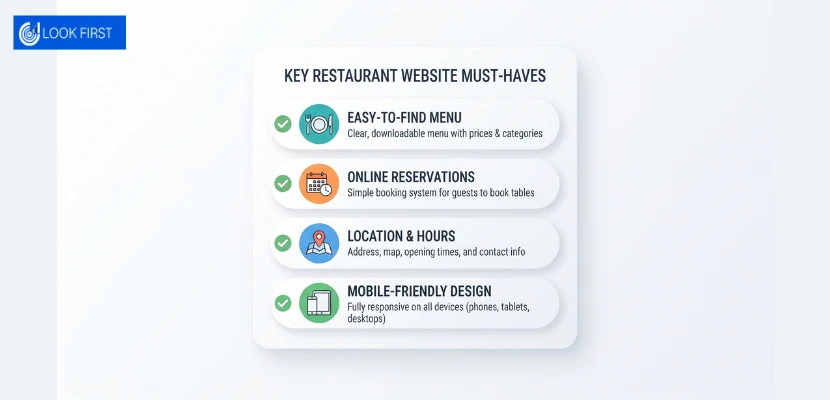
Avoid PDF-only menus. A proper HTML menu with clear categories, pricing, and short descriptions keeps visitors on the page longer. It displays correctly on any screen size, which matters since most restaurant site visits now come from mobile devices.
2. Prominent Booking and Ordering Buttons
Reservation and online ordering options visible without scrolling, ideally in the header and repeated throughout the page. Reducing the number of clicks between “hungry” and “booked” is one of the simplest ways to increase conversions.
3. High-Quality Food and Interior Photography
A gallery of professional images builds trust instantly and gives visitors a feel for the atmosphere before they arrive. This is one of the most consistent features across the best-performing restaurant sites, regardless of cuisine or price point.
4. Clear Location, Hours, and Contact Details
Put the address, opening hours, phone number, and a map in the header or footer of every page. Visitors should never have to hunt for basic details, especially when searching on the go.
5. Fast Load Times
Heavy, unoptimised images are one of the most common reasons restaurant sites feel slow. A site that takes too long to load loses visitors before the menu even appears, particularly on mobile connections. Adding structured data also helps Google understand and display the restaurant’s details more accurately in search results.
6. Local SEO Foundations
A restaurant website design also needs to be found. That means a connected and regularly updated Google Business Profile, consistent name/address/phone details across the web, and location-relevant content. This helps the site appear in “restaurants near me” style searches across London.
7. Accessibility and Clean Navigation
Simple menus, readable fonts, and a clear structure help every visitor, including those using screen readers or older devices, find what they need without friction.
Quick Answer: What Makes a Good Restaurant Website?
A good restaurant website loads fast, works well on mobile, shows a clear, searchable menu, and makes booking a table or placing an order easy within a click or two. Strong photography and clear location details build trust, while local SEO ensures nearby diners can actually find the site.
London Case Study: Frame Restaurant
Frame Restaurant, a contemporary dining spot in Notting Hill, approached Look First Marketing with a website that wasn’t converting visitors into bookings. The previous site had poor navigation, no clear menu presentation, no way to book a table online, and it wasn’t built with mobile diners in mind.
The redesign focused on the fundamentals covered above:
- A visually led, gallery-first homepage showcasing signature dishes
- Streamlined navigation guiding visitors straight to the menu and reservations
- Integrated online ordering
- A mobile-optimised layout with a prominent reservation form
The result was a site built to match the quality of the in-restaurant experience, giving Frame a digital presence that actually supports bookings rather than working against them. It’s a strong example of our restaurant website design services in practice.
Restaurant Website Design Features Compared
| Feature | Why It Matters | Common Mistake |
|---|---|---|
| Searchable menu | Keeps visitors engaged, works on mobile | PDF-only menu that’s hard to read on phones |
| Booking/ordering buttons | Reduces friction between browsing and booking | Buttons buried below the fold |
| Photography | Builds trust and atmosphere before arrival | Low-quality or outdated images |
| Location and hours | Removes uncertainty for last-minute diners | Details hidden in a separate contact page |
| Page speed | Keeps mobile visitors from leaving early | Unoptimised, oversized images |
| Local SEO | Helps the site actually get found | Inconsistent business details across the web |
Conclusion
A restaurant’s website design isn’t just decoration; it’s a direct line to bookings and orders. The features that matter most stay consistent: a fast, mobile-friendly menu, clear booking and ordering paths, strong photography, and a solid local SEO foundation so the site actually gets found.
As the Frame Restaurant case study shows, fixing these fundamentals can turn a site that was losing customers into one that supports the business the way the physical restaurant already does. Whether you’re starting from scratch or reworking an underperforming site, focus on removing friction between a hungry visitor and a confirmed booking; everything else builds on that.
Ready to give your restaurant a website that actually brings in bookings? Get in touch with our team today for a free consultation.
Frequently Asked Questions
A clear, mobile-friendly menu paired with an easy way to book a table or place an order is the biggest factor, since it directly affects whether a visitor becomes a customer.
It helps. Ordering directly through the restaurant’s site avoids the commission fees charged by third-party delivery platforms and keeps the customer relationship with the restaurant, not the app.
Very. Most restaurant searches now happen on mobile, often when someone is deciding where to eat within the next hour, so a slow or awkward mobile experience directly costs bookings.
Not every year, but it should be reviewed regularly for load speed, mobile usability, and whether the booking and ordering paths still work smoothly, since small friction points add up over time.