
SEO Mistake Costing Ealing Businesses Local Customers
Quick Answer
The mistake costing Ealing businesses local customers is doing SEO without ever analysing the competitors actually outranking them. Most businesses follow generic checklists (Google Business Profile, reviews, keywords) without checking what specific competitors in their area are doing differently, so effort goes into the wrong places while rivals with weaker offerings keep winning the Map Pack.
Walk down Ealing Broadway and search Google for almost any trade or service on your phone. There’s a good chance the same two or three businesses turn up again and again, regardless of what you’re actually looking for.
That’s no coincidence, and it’s rarely about budget. It usually comes down to one thing most Ealing businesses never do properly: a genuine competitor analysis.
If you’d rather have someone run this analysis for you, our digital marketing agency in Ealing handles exactly this kind of competitor audit as the first step of any local SEO campaign.
The Real Reason Some Ealing Businesses Always Win the Map Pack
Ealing is one of West London’s largest boroughs, home to roughly 370,000 residents spread across very different neighbourhoods. Ealing Broadway, Acton, Hanwell, Southall, Greenford, Perivale and Northolt all behave like separate local markets, even though they share a postcode area.
Yet the businesses that consistently rank well tend to have done one thing their competitors haven’t: they’ve studied exactly who they’re up against, area by area, and built their strategy around the gaps.
Everyone else is optimising in the dark, following a generic checklist and hoping it’s enough.
The Mistake: Doing SEO Without Ever Checking Who You're Actually Competing Against
Here’s the pattern we see constantly. A business owner in Ealing gets a list of “local SEO basics”: complete your Google Business Profile, collect reviews, add a blog, build some citations. They work through it diligently.
What they never do is stop and ask a simpler question. Who is actually beating me right now, and what are they doing differently?
That’s the mistake. Not laziness, not lack of effort, just effort spent without a map of the actual competition.
Generic Checklists vs Your Actual Local Competitor Set
A generic checklist tells you reviews matter. It won’t tell you that the plumber two streets away in Hanwell has 40 more reviews than you, all collected in the last six months, while yours are three years old.
A checklist tells you to write local content. It won’t tell you that your closest competitor has a dedicated page for every neighbourhood they serve, while you have one page trying to cover all of Ealing at once.
The advice isn’t wrong. It’s just not calibrated to the three or four businesses you’re genuinely competing against.
What a Real Competitor Analysis Looks Like (Not the Surface-Level Version)
A proper competitor analysis goes further than glancing at a rival’s website and thinking, “mine looks better.” It means pulling apart four specific areas.
Keyword Gaps: What They Rank For That You Don't
Search for your main service alongside your area, then search a handful of variations a customer might actually type. “Roofer Ealing”, “roof repairs Ealing Broadway”, “emergency roofer W5”. Note who shows up each time.
If the same competitor appears for terms you’ve never targeted, that’s a gap. It usually means they have content or a page addressing that specific search, and you don’t.
Citation and NAP Consistency Gaps
Citations are mentions of your business name, address and phone number across directories, and Google treats consistency here as a trust signal. Citation consistency has consistently featured among the documented factors in local search ranking surveys, alongside Google Business Profile signals and review activity.
Research covering more than 122,000 UK businesses found that top-ranked local businesses average around 86 citations, compared with roughly 75 for those sitting in positions seven to ten.
It’s not a huge gap in raw numbers, but it points to a pattern. The businesses winning tend to have their details listed accurately in more places, not just Google.
Check whether your competitor’s name, address and phone number match exactly across their website, Google Business Profile, and major directories. Then check your own. Mismatches (a different phone number here, an old address there) quietly undermine everything else you’re doing.
Review Velocity and Recency, Not Just Star Rating
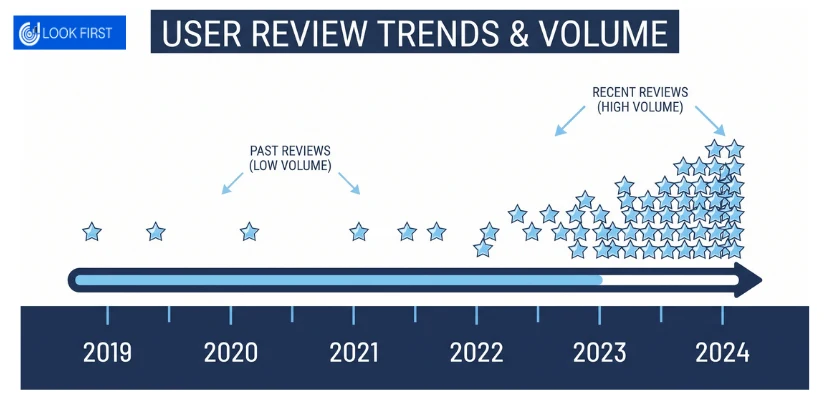
A 4.3-star business with 25 recent, detailed reviews often outperforms a 4.6-star business whose reviews stopped coming eighteen months ago. Google reads recency and consistency as a sign a business is genuinely active.
The competitive baseline for most UK local businesses sits somewhere between 15 and 50 quality reviews. Past that point, each additional review matters less than how recently it arrived.
Look at how often your competitor’s reviews land. Weekly? Monthly? Then compare it honestly to your own.
Content Depth on Their Location and Service Pages
Open a competitor’s page for a specific area, say Southall or Greenford, and read it properly. Does it mention anything specific to that neighbourhood, or could you swap the place name and nobody would notice?
Genuinely local content references things a template can’t: transport links, well-known landmarks, the character of the high street. Southall’s status as one of Europe’s largest South Asian shopping districts, for instance, or the fact that Ealing Studios has been producing films continuously since the silent era. Details like that signal a business actually knows the area, and Google’s helpful content systems are built to reward exactly that kind of specificity over generic copy.
Why This Mistake Hits Harder in Ealing Specifically
Ealing isn’t a single market, and treating it like one wastes a lot of local SEO effort. We touched on this when comparing SEO in Ealing with Central London: less saturated competition changes what moves the needle, and the same logic applies within the borough.
Ealing Broadway vs Hanwell and Northolt: Two Different Competitions
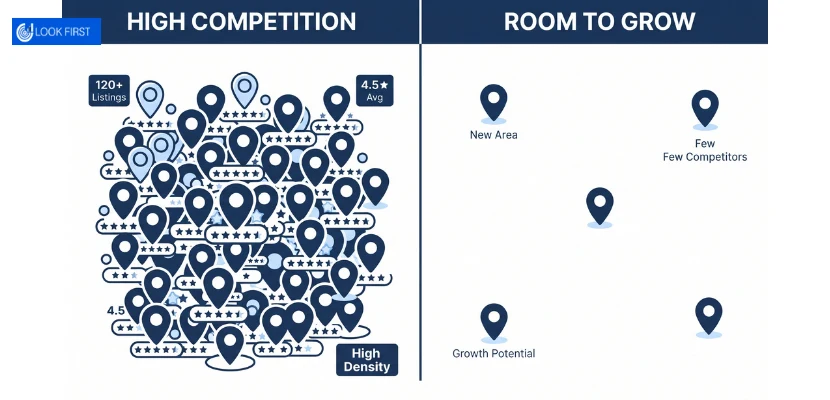
Ealing Broadway, boosted by its shopping centre and Elizabeth Line connections, has real and growing competition, particularly in hospitality and retail. Profiles here are actively managed, reviews come in fast, and content gets refreshed often.
Move a few miles out to Hanwell or Northolt and the picture changes. Trades and professional services here often compete against Google Business Profiles that haven’t been touched in years. If your business isn’t showing up in the Map Pack at all regardless of area, that’s usually a separate, more fundamental issue worth checking first: see our guide on why an Ealing business might not appear in the Map Pack.
That means the same amount of competitor analysis effort can produce very different results, depending on where your business sits. A Broadway café needs to work harder just to hold position. A Northolt tradesperson could realistically overtake half their local competition simply by being the one business that’s actually paying attention.
| Factor | Ealing Broadway | Hanwell / Northolt |
|---|---|---|
| Map Pack competition | High, especially hospitality and retail | Moderate, varies by trade |
| Profile activity among competitors | Frequently updated | Often dormant for months or years |
| Effort needed to move up | Sustained, ongoing | Achievable relatively quickly with consistent activity |
How to Fix It: A Simple Competitor Audit You Can Run This Week
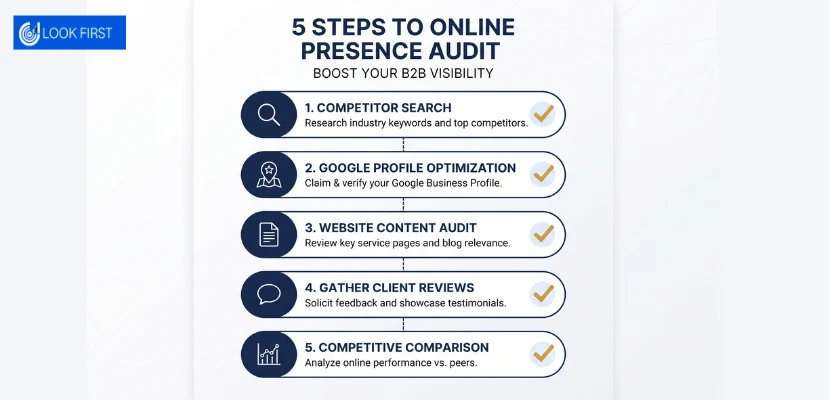
You don’t need expensive tools to start. A notebook, an incognito browser window and an hour will get you most of the way there.
- Search your core service plus your area, plus two or three real variations customers might use, and write down who appears each time
- Open each competitor’s Google Business Profile and note their review count, star rating, and the date of their most recent review
- Check their website’s location pages for genuinely local detail versus generic filler
- Search their business name plus “review” to see where else they’re mentioned online, and cross-check their name, address and phone number for consistency
- List three specific things they’re doing that you aren’t, and three things you already do better than them
Repeat this every few months. The businesses in Ealing that stay ahead aren’t necessarily the ones with the biggest budget. They’re the ones who keep checking.
Conclusion
The mistake costing Ealing businesses local customers isn’t a lack of effort. It’s effort spent without ever properly mapping who they’re actually racing against, street by street, competitor by competitor.
Fix that one gap and everything else, your reviews, your content, your citations, starts working towards something specific instead of a generic checklist.
Ready To See Exactly Who’s Outranking You?
Look First Marketing offers a free local SEO audit for Ealing businesses, showing exactly which competitors are winning the Map Pack and why.
Frequently Asked Questions
Competitor analysis in SEO means studying the businesses currently outranking you to understand why. This covers their keyword targeting, review activity, citation consistency and content depth, so you can identify specific, actionable gaps rather than following generic advice.
Search your core service alongside your area and several realistic variations a customer might type. Note which competitors appear repeatedly. Free tools like Google’s “People also search for” and autocomplete suggestions can also reveal terms you haven’t targeted yet.
Rankings depend on more than website quality. Review recency, citation consistency, Google Business Profile activity and how well content matches local search intent often matter more than design. A dated but active profile frequently beats a polished but neglected one.
Every three to four months is a reasonable rhythm for most small businesses. Local search results shift as competitors update profiles, gain reviews or publish new content, so a periodic check keeps your strategy aligned with what’s actually happening in your market.
Neither alone. Google weighs relevance, distance and prominence together. Prominence includes review volume and recency, citation consistency, and overall online authority, which is why two equally close businesses can rank very differently in the Map Pack.