
The 70/20/10 Rule: How Westminster Firms Should Split Their Digital Marketing Budget
Quick Answer
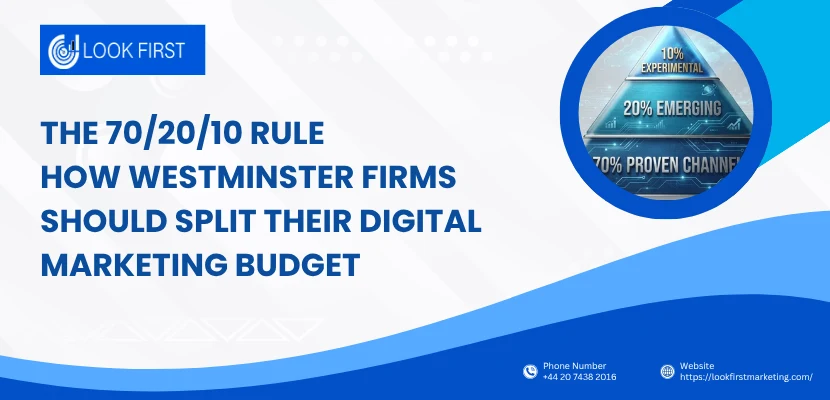
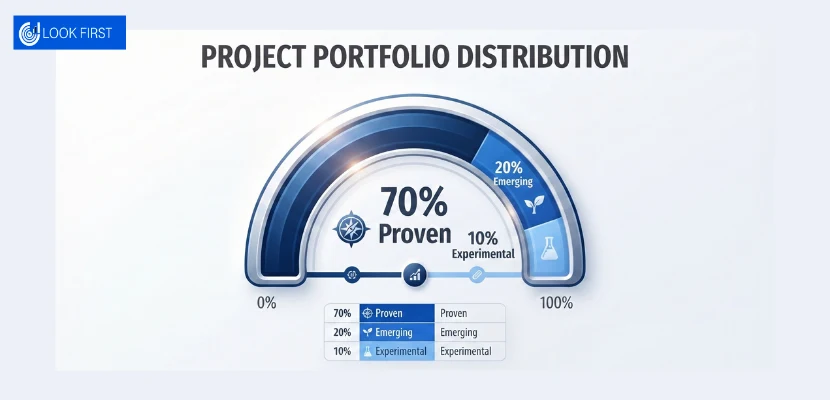
The 70/20/10 rule splits a marketing budget into three tiers: 70% on proven channels that already work, 20% on emerging tactics built on that foundation, and 10% on genuine experimentation. It’s a framework Google and Coca-Cola both used to manage risk, and it translates well to how Westminster’s professional services firms should think about marketing spend.
Westminster firms tend to answer to someone. A managing partner, a board, a client who expects results to be defensible, not just hopeful. That’s exactly the kind of environment where a structured budget framework earns its keep.
What The 70/20/10 Rule Actually Means
It isn’t a rigid formula, and nobody’s auditing you down to the last percentage point. The value is in the discipline it enforces, protecting space for both reliability and experimentation rather than letting one crowd out the other.
Where the Framework Actually Came From
The ratio has real, traceable origins, not just another marketing buzzword. Google used it internally for engineering resource allocation, as Eric Schmidt and Jonathan Rosenberg describe in their book How Google Works: 70 per cent toward the core business (search and ads), 20 per cent toward emerging products, and 10 per cent toward genuinely new ideas.
Coca-Cola adapted the same ratio for marketing under its “Content 2020” initiative, championed by Jonathan Mildenhall, then Vice President of Global Advertising Strategy. At a Content Marketing World keynote, Mildenhall described the same split directly: seventy per cent safe content, twenty per cent innovating on what already works, and ten per cent genuinely high-risk.
Why This Framework Fits Westminster Firms Specifically
Professional services firms in Westminster tend to need decisions they can defend, not just ones that felt right at the time. A structured framework like this gives a marketing spend a clear internal logic, which matters more here than in a destination-driven area where impulsive, broad-reach spending can sometimes pay off on its own. It’s the same discipline we bring running a digital marketing agency in Westminster for clients who need to justify every line of spend.
A retail business near a tourist hotspot might justify a sudden burst of experimental spend on the strength of footfall alone. A consultancy or legal firm near Victoria answering to a board rarely has that luxury, and usually shouldn’t want it.
The 70%: What Belongs Here For A Westminster Business
This is the reliable core: channels with a track record specific to B2B and professional services, rather than generic retail advice.
- SEO that targets the specific, high-intent searches a Westminster client actually makes
- Paid search for terms with clear, provable commercial intent
- Email marketing to an existing list of contacts and past clients
- LinkedIn, which consistently outperforms other platforms for B2B relationship-building in this kind of firm
None of this needs to be flashy. It needs to work reliably, month after month, because it’s funding roughly three quarters of the entire marketing effort.
The 20%: Where Westminster Firms Can Afford To Stretch
This tier builds on what’s already proven rather than starting from nothing. It’s where a firm tests a genuinely new angle on an existing strength.
That might mean investing in AIO and making sure AI tools like ChatGPT and Google’s AI Overviews can find and recommend the firm when someone asks a relevant question. We’ve covered the fundamentals of that in our guide to what AIO is and why businesses need it, so we won’t repeat it here. It could also mean a new content format built on an existing successful topic, rather than an entirely untested one.
The 10%: Genuine Experimentation Without Real Risk
This is the smallest, most deliberately capped slice, reserved for ideas with no track record at all inside the business. The cap itself is the point. It lets a firm test something genuinely new without risking the channels that actually pay the bills.
For a Westminster professional services firm in 2026, that might mean testing GEO visibility on a genuinely new platform, or trying an AI-generated content format nobody on the team has attempted before. Our comparison of GEO vs SEO vs AEO is a useful starting point if this tier is new territory.
A Practical Example Budget Split
To make this concrete, here’s an illustrative example (not a real client figure) showing how a Westminster firm with a modest monthly marketing budget might apply the ratio.
| Tier | Allocation | Example Channels |
|---|---|---|
| 70% Proven | £3,500 of a £5,000 budget | SEO, LinkedIn, email marketing, paid search |
| 20% Emerging | £1,000 of a £5,000 budget | AIO visibility work, new content formats |
| 10% Experimental | £500 of a £5,000 budget | GEO testing, new platforms, AI-generated formats |
The actual figures will vary enormously by firm size and sector. What matters is keeping the proportions roughly intact rather than letting one tier quietly swallow the others.
Is The 70/20/10 Rule Still Right For Every Business?
Not necessarily, and it’s worth saying so plainly. Tesla famously inverted the model in its early growth phase, putting roughly seventy per cent into experimental approaches like owner advocacy and event-based marketing while spending minimally on traditional automotive advertising.
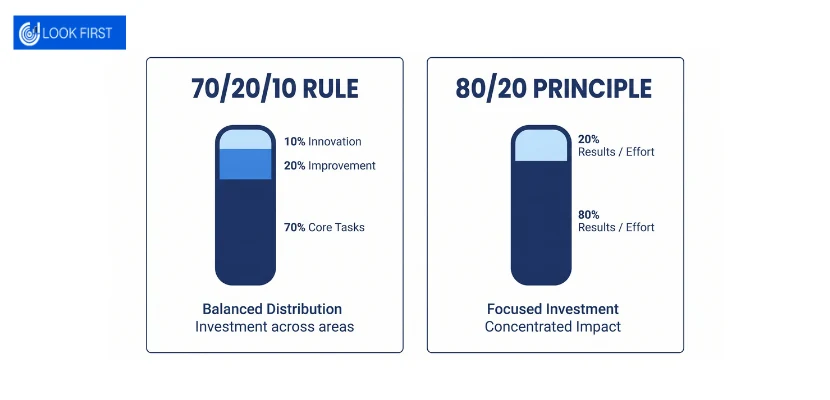
The Pareto principle, the 80/20 rule, offers a different lens entirely, arguing that eighty per cent of results tend to come from twenty per cent of effort. Neither framework is universally correct. The right one depends on how much risk a business can genuinely absorb, and for most Westminster professional services firms, that is usually less than a fast-growing consumer brand can stomach.
Conclusion
The exact percentages in the 70/20/10 rule matter less than the discipline behind them. Protecting space for both reliability and experimentation, rather than letting one crowd out the other, is what actually makes the framework useful.
For Westminster firms that need to justify marketing spend to a partner, a board or a client, that structure tends to matter more than it would for a business that can afford to chase whatever looks exciting this quarter.
Not Sure Your Budget Is Split Right?
See exactly where your marketing spend is going, and whether it’s actually protecting the reliable channels while leaving room to grow.
- Proven channels
- Emerging opportunities
- Experimental spend
FAQS
It’s a framework that splits your marketing budget into three risk tiers: 70% on proven channels with a track record, 20% on emerging tactics that build on existing success, and 10% on genuinely untested experimentation. Google and Coca-Cola both used versions of it.
It originated in learning and development research before Google adapted it for engineering resource allocation, as described in Eric Schmidt and Jonathan Rosenberg’s book How Google Works. Coca-Cola later applied the same ratio to marketing under its “Content 2020” initiative.
There’s no universal figure, as it depends heavily on firm size, sector and goals. The 70/20/10 rule offers a way to structure whatever budget you do have, rather than dictating the total amount you should spend.
No. The 80/20 rule, or Pareto principle, argues that most results come from a small share of effort. The 70/20/10 rule is specifically about balancing proven, emerging and experimental spend, a different purpose entirely.
Yes, though the amounts involved will be far smaller. The proportions still help even a modest budget avoid two common mistakes: spending nothing on anything new or gambling too much on unproven ideas.