
How Much Does a Website Cost in London? A 2026 Pricing Guide

Ask five London web design agencies for a quote, and you’ll probably get five very different numbers. One freelancer might say £600. One agency might say £25,000. Neither of them is necessarily wrong; they’re just quoting for completely different jobs.
That gap is exactly why this question is so hard to Google your way out of. Most guides either give you a single vague number or bury the real detail behind a “get in touch for pricing” form.
Here’s the honest version. As a rough starting point, a professional website in London in 2026 typically costs somewhere between £500 for a simple DIY build and £50,000 or more for a fully bespoke, feature-heavy site. Where you land in that range depends on a handful of very specific factors, which we’ll walk through properly below. If you’re starting from scratch and want the full picture beyond just pricing, our complete guide to web design is worth reading alongside this one.
By the end of this guide, you’ll know what drives the price up or down, what a fair quote actually includes, and which red flags mean you should ask more questions before you sign anything.

How Much Does A Website Cost In London
If you just want the numbers before the detail, here’s the short version. All figures below are exclusive of VAT unless stated otherwise, since most UK agencies are VAT-registered and add 20% to the final invoice.
These are starting points, not fixed prices. A solicitors’ firm generating serious revenue will often invest £10,000 or more to match client expectations, while a local tradesperson might get exactly what they need for £1,500. Two websites can look similar on the surface and still cost wildly different amounts once you understand why.
| Website Type | Typical London Cost | What You Usually Get |
|---|---|---|
| DIY Builder (Wix, Squarespace) | £100 to £300 per year | Template design, basic hosting, limited SEO control |
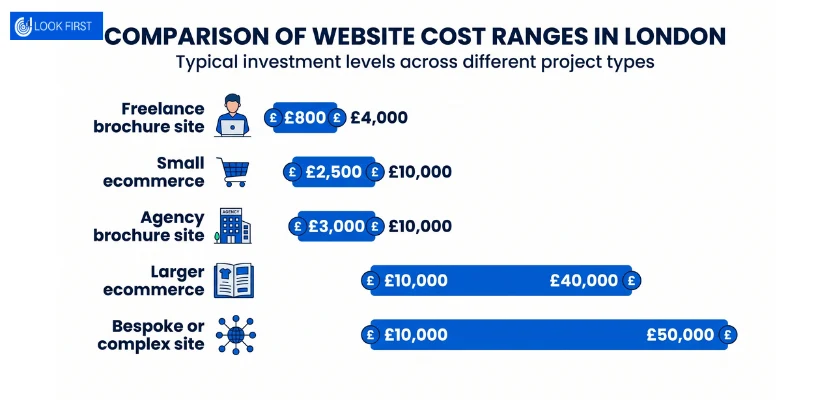
| Freelance Brochure Site | £800 to £4,000 | 5 to 10 pages, some customisation, one designer |
| Agency Brochure Site | £3,000 to £10,000 | Custom design, SEO foundations, project team |
| Bespoke or Complex Site | £10,000 to £50,000+ | Custom UX, integrations, ongoing dev support |
| Small Ecommerce Store | £2,500 to £10,000 | Up to 50 products, standard checkout |
| Larger Ecommerce Build | £10,000 to £40,000+ | Custom features, CRM links, complex catalogues |
What Affects The Cost Of A Website In London
Website pricing isn’t random, even though it can feel that way. A handful of factors do most of the heavy lifting in the final invoice.
Number of pages and site complexity
A single landing page takes a day or two to design and build properly. A 15 to 20 page site with different layouts, forms, and content types can take several weeks.
More pages don’t just mean more design work. They mean more content to write, more cross-device testing, and more review rounds before launch.
Custom design versus templates
A customised template will always cost less than a fully bespoke design built from scratch. Templates come with pre-built layouts that a designer adapts to your branding, making the process faster and cheaper.
Custom design typically adds £1,000 to £5,000 or more to the base price, depending on how much original illustration, photography or interactive work is involved. If you’re weighing up how much design actually matters versus just launching something quickly, our guide on a good website design covers what’s worth paying for and what isn’t.
Platform choice: WordPress, Webflow, Shopify or Wix
The platform you build on affects both the upfront cost and what you’ll pay every month afterwards.
- WordPress needs separate hosting and plugin licences, but offers the most flexibility long term
- Webflow bundles hosting, SSL and CMS into one plan, usually £31 to £59 per month, and suits marketing teams who want to edit content without a developer
- Shopify is built for ecommerce, with plans from around £25 to £340+ per month depending on features and transaction volume
- Wix and Squarespace are the cheapest route in, but come with real limits on design flexibility and technical SEO control
Copywriting, photography and content
Cheap quotes often exclude content entirely, leaving you to write every page yourself. Professional copywriting for a small business site typically adds £500 to £2,000, and a proper photo shoot can add a similar amount again.
If a quote doesn’t mention who’s writing your content, ask. It’s one of the most common things left out of a low-ball price.
SEO and technical setup
This is the part that separates a website that just exists from one that actually brings in enquiries. Meta titles, meta descriptions, a sitemap, schema markup and clean URL structures should all be part of a proper build, not an afterthought.
A quote that mentions none of this is a quote for a site Google will struggle to rank. It’s the most common gap in cheap quotes, and often the most expensive thing to fix retrospectively.
Mobile-first, accessibility and GDPR compliance
None of these is optional any more, and each one adds a bit of build time. Google indexes the mobile version of your site by default, so responsive design has to work properly on a phone screen, not just look acceptable on one. We’ve written a full explainer on what responsive website design actually involves if you want the detail behind why this matters for cost as well as SEO.
Accessibility is increasingly expected too, both for genuine inclusivity and because UK public sector and larger commercial clients now often ask for WCAG 2.2 conformance as standard. Building this in from the start (proper colour contrast, keyboard navigation, alt text) is far cheaper than retrofitting it later.
GDPR compliance also has to be designed in, not bolted on. A cookie consent banner, a proper privacy policy, and clear data handling for any contact forms are all expected under ICO guidance, and a reputable agency will factor this into the build rather than leaving you to sort it out afterwards.
The impact of AI on 2026 pricing
Worth flagging, honestly: several London agencies have reported build costs rising by 8 to 12% over the past year, partly driven by AI integration work and the extra effort required to make sites “AI search ready” for tools like Google’s AI Overviews. This might mean structured data for AI crawlers, FAQ schema, or content built to answer questions directly rather than just rank for keywords.
If you want your site genuinely optimised for how people now search using AI, ask whether GEO (Generative Engine Optimisation) is part of the build.

Website Costs By Type
Different types of websites have distinct cost structures, so it’s worth breaking them down individually rather than relying on a single average.
Brochure or small business website cost
A basic five-page brochure site, the kind most trades businesses, consultants and local shops need, typically falls between £800 and £4,000 from a freelancer, or £3,000 to £10,000 from an established London agency.
The gap between those two figures usually comes down to process. An agency brings together a designer, a developer, a project manager, and often an SEO specialist, all of whom appear on the invoice.
Ecommerce website cost
A small online shop with up to 50 products, built on WooCommerce or a basic Shopify theme, generally costs between £2,500 and £10,000. That covers product listings, a checkout flow and standard payment integration.
Larger stores with hundreds of products, custom filtering, subscription models, or CRM integration can cost from £10,000 to £40,000 or more. Payment processing fees, usually around 2.5% to 2.9% plus 30p per transaction, add to this as an ongoing cost.
Bespoke or custom-built website cost
For organisations that need something genuinely unique, whether that’s a complex booking system, a member portal, or extensive third-party integrations, budgets typically start at around £10,000 and can climb well past £50,000.
This bracket usually includes a discovery phase, UX research, custom design, and a dedicated development team rather than a single freelancer working alone.
Website redesign cost
A huge share of people asking about website cost already have a site; they just want it rebuilt. Redesigns are usually cheaper than a brand-new build because content, branding, and structure often already exist, and typically cost £1,500 to £8,000, depending on how much is kept versus rebuilt from scratch.
The main cost variable here is content migration. Moving years of blog posts, product listings, or case studies to a new platform without losing SEO rankings takes time, and it’s worth asking any agency directly how they handle 301 redirects during a rebuild.
Website versus web app
It’s worth being clear on this distinction before requesting quotes, since the two get costed very differently. A website mainly displays information and captures enquiries, while a web app involves user accounts, dashboards, or custom logic, think a booking system or a client portal.
Simple websites sit comfortably in the £800 to £10,000 range covered above. Web apps, because they involve genuine software development rather than content and design, typically start around £15,000 and can run well into six figures depending on complexity.
Freelancer vs Agency vs DIY Builder: Which Is Right for You
There’s no universally correct answer here. It depends on your budget, your technical confidence, and how much the website actually matters to your business.
A useful way to think about it: a DIY builder is fine if your website is essentially a digital business card. If it needs to generate enquiries, convert visitors, or represent a brand people are trusting with real money, a freelancer or agency usually pays for itself.Freelance day rates in London typically range from £250 to £600, while agency day rates run from £600 to £1,500, reflecting the wider team behind the work.
| Route | Typical Cost | Best For | Watch Out For |
|---|---|---|---|
| DIY Builder | £100 to £300/year | Testing an idea, very tight budgets | Limited SEO, generic design, your own time cost |
| Freelancer | £800 to £4,000 | Small businesses, simple brochure sites | Availability if they’re unwell or overbooked |
| Agency | £3,000 to £50,000+ | Growing businesses that need lead generation | Higher day rates, longer lead times |
Why London Pricing Is Higher Than The Rest Of The UK
If you’ve compared quotes between a London agency and one based in Manchester or Birmingham, you’ve probably noticed a real difference. London agencies typically charge 30% to 50% more than regional counterparts for a comparable project.
This isn’t padding. It reflects higher salaries, more expensive studio space, and a higher cost of living across the board for London-based teams.
Some agencies now offer a hybrid model to manage this, with strategy and client management based in London and development handled remotely. It’s worth asking directly whether this applies, since it can bring the price down without necessarily compromising quality.
Pricing can also vary slightly borough to borough depending on local competition and demand. If you’re specifically looking for support in areas like Islington, Camden, or Enfield, it’s worth comparing a few local quotes rather than assuming a single flat London rate applies everywhere.
Ongoing Website Costs (Hosting, Maintenance and Domain)
The build cost is only part of the picture. Every website has running costs, and these are easy to underestimate when you’re focused on the upfront number.
| Ongoing Cost | Typical Monthly Range |
|---|---|
| Hosting | £10 to £80 |
| Domain Renewal | Around £1 to £2 (billed yearly) |
| Maintenance and Updates | £30 to £150 |
| Security Monitoring | £10 to £50 |
| Agency Care Plan (All-Inclusive) | £99 to £350 |
It’s worth being clear that these figures cover keeping the site running, not growing it. Ongoing SEO, content updates and digital marketing sit in a separate budget entirely, and conflating the two is a common source of confusion when businesses plan their first year online.
Monthly Subscription vs One-Off Payment
Two payment models dominate the London market, and each suits a different kind of business.
One-off payment means a higher upfront cost, typically requiring a 25% to 50% deposit, but you own the finished site outright once it’s paid off.
Monthly subscription models, often £100 to £250 per month, bundle design, hosting, updates and support into one recurring fee. This spreads the cost and suits businesses that don’t want a large lump sum commitment, though you’re usually paying more over several years than you would with a one-off build.
Neither is inherently better. A business with strong cash reserves might prefer ownership and a one-off cost, while a newer business might value the predictability of a monthly fee.
Red Flags To Watch For In A Cheap Quote
A low price isn’t automatically a bad sign, but certain patterns are worth questioning before you commit.
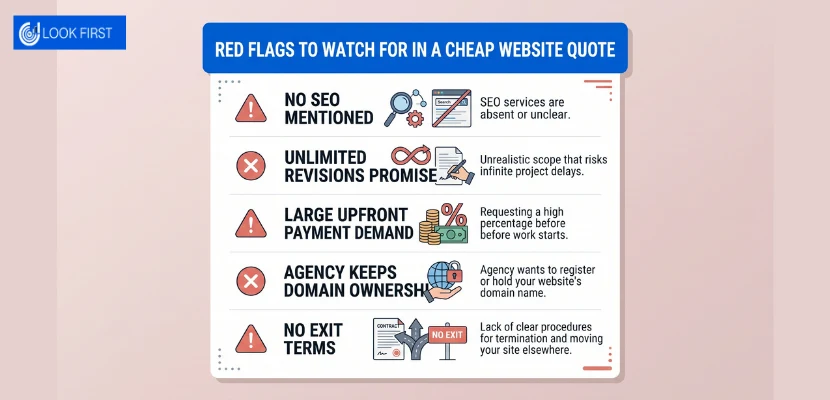
No mention of SEO fundamentals
If meta titles, sitemaps and schema markup aren’t mentioned anywhere, ask why
Unlimited revisions
This usually means either a generic template that needs little changing, or a vague scope designed to protect the agency’s margin later
Large upfront payment demands
Anything above 50% before work starts shifts risk heavily onto you
The agency keeps ownership
Watch for agencies that retain control of your domain, hosting, or Google Ads account rather than putting it in your name
No exit terms
A fair contract includes data portability and a clear process for moving your site elsewhere if the relationship ends. If you spot two or more of these in a quote, it’s worth asking direct questions before signing anything. Our guide on questions to ask a web design agency walks through exactly what to ask before you commit.
How To Budget For Your Website Project
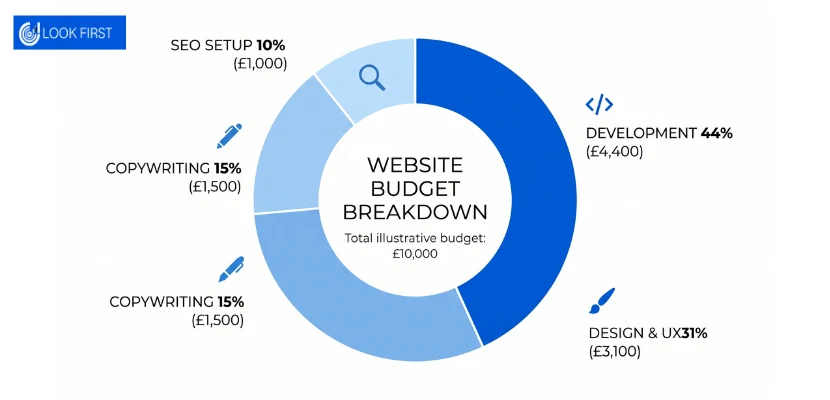
A useful way to picture where the money goes is a worked example. For a typical £8,000 small-business website project, the spend usually breaks down roughly as follows: around £2,500 on design and UX, £3,500 on development and build, £1,200 on copywriting and content, and £800 on SEO setup and testing.
Timelines tend to track cost fairly closely. A simple five-page brochure site can be live in two to three weeks. A bespoke ten to fifteen page site with custom features typically takes six to ten weeks, and a complex ecommerce build can run three months or more.
Before requesting quotes, it helps to be specific rather than vague. “I need a website” gets you wildly inconsistent numbers. “I need a seven-page WordPress site with a contact form, a blog and Google Maps integration” gets you quotes you can actually compare like for like.
A quick checklist for comparing quotes fairly
Once you’ve got two or three quotes in front of you, it’s easy to just look at the bottom line number. A fairer comparison checks whether each quote includes the same things:
- Is the price VAT-inclusive or VAT-exclusive?
- Who’s writing the content, and is copywriting included?
- Is SEO setup (metadata, sitemap, schema) part of the build or a separate cost?
- What happens to hosting, domain and login ownership after launch?
- How many revision rounds are included before extra charges apply?
- Is there a maintenance plan, and is it optional or compulsory?
Two quotes that look £2,000 apart can end up costing roughly the same once you account for what’s actually included in each one.
Why Choose Look First Marketing For Your Website
As a digital marketing agency in London, we build websites with search visibility in mind from day one, rather than handing over a finished site and leaving it to rank on its own. Our web design and development services in London are built specifically for local UK small businesses, particularly in trades, hospitality, and professional services, with every quote itemised clearly across design, development, content, and SEO.
We also build every site ready for how people search in 2026, including GEO and AI-search readiness as standard, and you’ll always deal directly with the London-based team doing the work, with no offshore handoffs in between.
If you’d like a second opinion on a quote you’ve already received, our team is happy to take a look.
Conclusion
Price alone is the wrong question to lead with. The right one is what the website needs to actually achieve for your business over the next few years, and what level of investment gets you there without overpaying or under-delivering.
Budget, technical confidence, and how central the site is to your growth should decide your route, not just the number on the quote. A £5,000 site that generates real enquiries is a better investment than a £500 site that quietly does nothing.
An informed buyer asks the right questions before signing anything, and ends up with a website that earns its cost back rather than one that simply exists.
Ready To Get A Straight Answer On Your Website Cost?
Contact us now and get a free, no-obligation quote with Look First Marketing, tailored to your business, with transparent pricing and nothing hidden in the small print.
FAQS
Most small businesses in the UK should budget between £1,000 and £5,000 for a professional website, though prices realistically range from £500 for a basic DIY build to £50,000 or more for a fully bespoke, feature-rich site depending on complexity and platform.
London agencies typically charge 30% to 50% more than their regional counterparts due to higher salaries, office costs, and the general cost of living in the capital. Some offer hybrid models with London-based strategy and remote development to reduce this premium.
A small ecommerce website with up to 50 products typically costs £2,500 to £10,000 in the UK. Larger stores with custom features, CRM integration, or hundreds of products can cost £10,000 to £40,000 or more, plus ongoing platform and transaction fees.
Website maintenance typically costs £30 to £150 per month for updates and content changes, plus £10 to £80 for hosting and £10 to £50 for security monitoring. Many London agencies bundle all of this into a single care plan for £99 to £350 per month.
A website redesign typically costs £1,500 to £8,000, usually less than a brand-new build, since existing content, branding, and structure can often be reused. The main cost driver is content migration, particularly preserving SEO rankings through proper redirects during the switch.