
The Complete Guide To SEO For Businesses: Everything You Need To Know In 2026
SEO (Search Engine Optimisation) is the process of improving a website so it ranks higher in Google’s organic search results, without paying for ads. It rests on seven core components: keyword research, technical SEO, on-page SEO, content strategy, link building, E-E-A-T, and local SEO. A well-executed SEO campaign delivers an average ROI of 748%.
Yet the vast majority of businesses online remain invisible to Google, missing out on the most powerful and cost-effective marketing channel available. In 2026, with AI-powered search reshaping how people find information, that gap between businesses that get SEO right and those that don’t is widening further still.
What Is SEO?
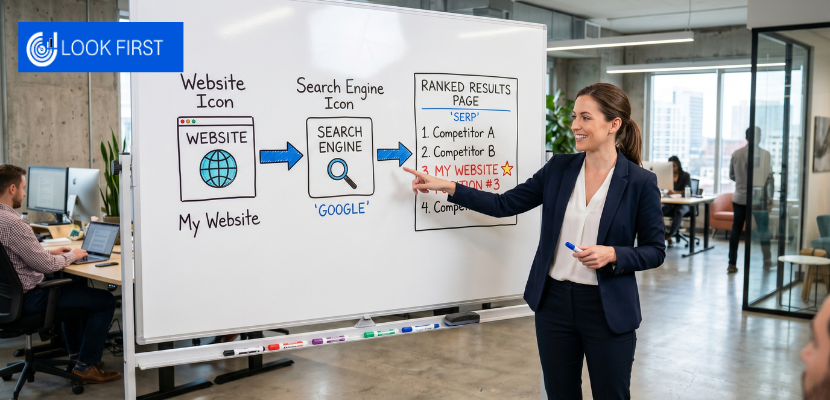
When someone types a query into Google, “web designer near me,” “how to improve my website,” or “digital marketing agency London,” Google’s algorithm evaluates thousands of ranking signals across millions of web pages to decide which results to show, and in what order. SEO is the practice of ensuring your website sends the right signals so Google ranks it as highly as possible for the searches that matter to your business.
The fundamentals of SEO come down to three things: making sure Google can find and understand your website, ensuring your content is genuinely the best answer to the questions your audience is asking, and building the kind of authority and trust that Google uses to determine which websites deserve to rank at the top.

What Has Changed In SEO Over The Last Few Years?
The search landscape has shifted dramatically over the last three years. Google’s Helpful Content updates have penalised thin, low-quality content at a site-wide level. Over 60% of Google searches now end without a click, meaning more than half of all Google searches now end without a click. And AI Overviews are reshaping how results are displayed for an increasing proportion of queries. Despite all this, organic search remains the single most powerful digital marketing channel for businesses, and the numbers explain why.
Google processes an estimated 13.7 billion searches per day and holds approximately 89-91% of the global search engine market share. And despite these seismic shifts in how search works, organic search remains the largest single source of website traffic among digital marketing channels, a position it has held consistently and shows no sign of relinquishing.
The business case for investing in SEO is equally compelling:
- The number one organic result on Google earns 39.8% of all clicks for that search
- Moving from position two to position one increases clicks by 74.5%
- Only 0.78% of users ever click on results from Google’s second page
- SEO leads close at a 14.6% rate, compared to just 1.7% for outbound marketing
- A well-executed SEO campaign delivers an average ROI of 748%, meaning for every pound invested, businesses receive an average of £7.48 back
- 92% of marketers plan to maintain or increase their SEO investment in 2026
The competitive reality is stark. 96.55% of web pages receive zero traffic from Google, and only 5.7% of all pages reach the top 10 within one year of publication. The direction of travel in SEO is clear: Google is getting better at identifying and rewarding genuine quality, genuine expertise, and genuine helpfulness, and getting better at penalising everything that falls short of that standard.
SEO is not a channel where passive participation produces results. It requires a deliberate, consistent strategy, and the businesses executing that strategy correctly are the ones capturing the traffic, leads, and revenue that others leave behind. This is why working with an experienced digital marketing agency in London has become one of the most common investments among businesses serious about long-term online growth.
Will SEO Still Be Relevant In 2026?
Google still sends 345 times as much traffic to websites as ChatGPT, Gemini, and Perplexity combined. AI Overviews appear in 34% of queries, but 44.2% of those citations come from the first 30% of a page, meaning well-structured, expert content still wins visibility even without a click. And 92% of marketers are increasing their SEO budgets in 2026, not cutting them. That is not the behaviour of an industry abandoning a dying channel.
What has changed is where the wins come from. Thin, generic content is struggling. But businesses that produce genuine expertise, authoritative content, and a strong local presence are seeing better returns than ever. SEO is not dying. The businesses doing it wrong are.
How SEO Works - The Complete Framework
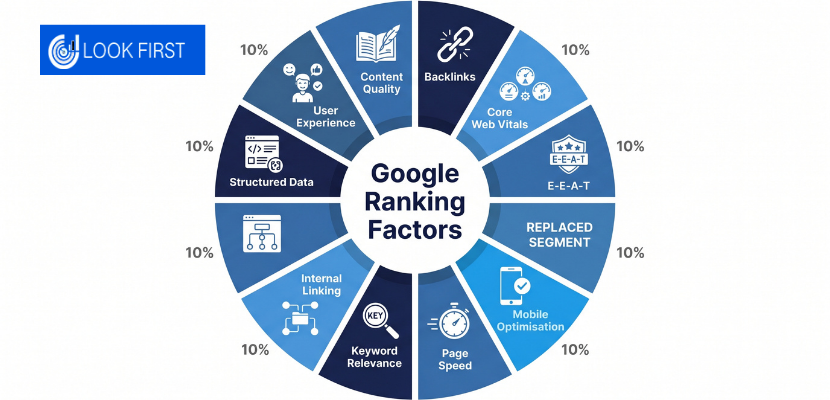
Google’s algorithm evaluates over 200 ranking factors when deciding where to position a web page in search results. While the full list is not publicly disclosed, years of research and testing have clearly identified the most significant signals. If you want a simpler, beginner-friendly breakdown first, our guide on how SEO actually works covers the fundamentals step by step before diving into the full framework below.
The most important ranking factors in 2026 are: relevant, high-quality content; backlinks from authoritative websites; Core Web Vitals and page experience; E-E-A-T (Experience, Expertise, Authoritativeness, and Trustworthiness); and mobile-first optimisation.
SEO encompasses three broad disciplines, Technical, On-Page, and Off-Page, each broken down into specific components that every effective strategy must address. Here are the seven core components your SEO strategy needs to cover:
1. Keyword Research
Every effective SEO strategy begins with keyword research, the process of identifying the exact words and phrases your potential customers use in Google searches for what you offer.
Keyword research is not simply about finding high-volume search terms. It is about understanding search intent, the reason behind a search query, and matching your content to what users are actually trying to accomplish.
There are four types of search intent:
Informational
The user wants to learn something. “What is SEO?” or “How does Google rank websites?”
Navigational
The user is looking for a specific website or page. “BBC News website “
Commercial
The user is researching options before making a decision. “Best SEO agency London”
Transactional
The user is ready to take action. “Hire SEO agency London” or “SEO services pricing.”
The most commercially valuable keywords are those with commercial and transactional intent. Long-tail keywords, phrases of four or more words, account for 70% of all search traffic and convert at 4.2%, compared to just 1.8% for short head terms. Building a keyword strategy around specific, high-intent queries is consistently more effective than trying to rank for broad, highly competitive single-word terms.
2. Technical SEO
Before making any technical improvements, the recommended first step is a full SEO audit, a structured review of your website’s technical health, on-page optimisation, and backlink profile. An audit identifies exactly where the gaps are, so every action taken delivers maximum impact. Technical SEO is the foundation on which everything else is built. A website with excellent content and strong backlinks will still underperform if its technical foundations are weak.
The core areas of technical SEO include:
Page speed
Google’s Core Web Vitals measure how fast your pages load and how responsive they feel to users. Slow pages rank lower and lose visitors before they have a chance to convert.
Mobile-first indexing
Google now uses the mobile version of your website as the primary basis for indexing and ranking. 63% of Google’s organic search traffic comes from mobile devices, making mobile optimisation a non-negotiable ranking requirement.
Crawlability and indexation
If Google cannot crawl and index your pages, it cannot rank. A clean site structure, an accurate XML sitemap, and a properly configured robots.txt file are all essential.
Structured data
Schema markup helps Google understand the specific content of your pages and can earn rich results in search, star ratings, FAQ panels, and breadcrumbs, which significantly increase click-through rates.
HTTPS and security
Google uses HTTPS as a ranking signal. An unsecured website not only ranks lower but also actively deters users from engaging with it.
3. On-Page SEO
On-page SEO ensures that each individual page on your website is optimised to rank for its target keyword and to provide genuine value to every visitor who lands on it.
The key on-page elements include:
Title tags
The clickable headline that appears in search results. Titles with 40 to 60 characters achieve the highest click-through rates in organic search results.
Meta descriptions
The short description beneath your title in search results. While not a direct ranking factor, a well-written meta description significantly impacts click-through rate.
Heading structure
Using H1, H2, and H3 tags to organise your content clearly helps both users and search engines understand the hierarchy and focus of your page.
Keyword placement
Your primary keyword should appear in your title tag, first paragraph, at least one H2 heading, and naturally throughout the body of the page.
Forced repetition is counterproductive; natural, contextual use is what Google rewards. If you’re looking to put these principles into practice, Look First Marketing’s on-page SEO services in London cover every element, from title tags to content structure.
Internal linking
Linking to related pages on your website distributes authority and helps Google understand the relationships among your content. Sites that implement strategic internal linking structures see an average improvement in ranking of 4.6 positions for their target keywords, making it one of the highest-ROI SEO activities available.
Content quality and depth
The average first-page result on Google contains approximately 1,447 words, and content over 3,000 words wins three times more traffic, four times more shares, and 3.5 times more backlinks than average-length content.
4. Content Strategy
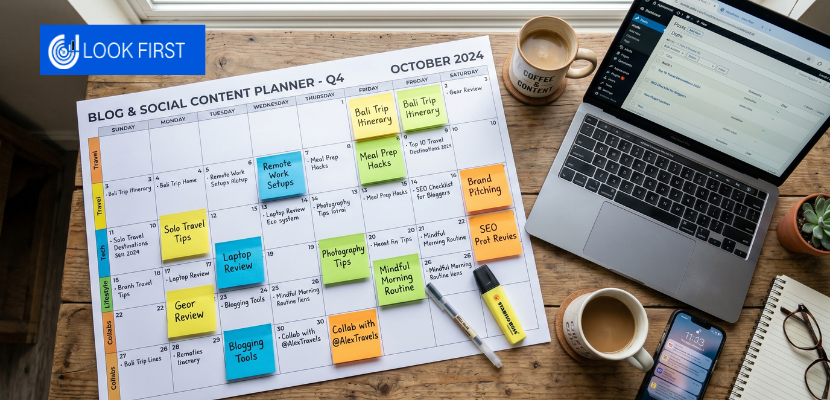
Content is the vehicle through which SEO delivers results. Every piece of content you publish is an opportunity to rank for a relevant search query, demonstrate expertise to your audience, and build the topical authority that Google uses to determine which websites deserve prominent rankings.
An effective SEO content strategy is built around topic clusters, a pillar page that covers a broad subject comprehensively, supported by a network of cluster articles that go deep on each specific subtopic. This architecture signals to Google that your website has comprehensive expertise across an entire subject area, not just isolated knowledge on individual keywords.
Articles with 3,000+ words earn 3.5 times as many backlinks as shorter content, making consistent long-form blogging the most reliable organic link-building strategy available.
The most effective content in 2026 answers real questions with real depth, is written by people with genuine expertise, and covers a topic so thoroughly that a reader has no need to go anywhere else. This is what Google’s algorithm is designed to reward, and it is what builds durable, compounding organic traffic over time.
Content strategy quick checklist:
- Build topic clusters around pillar pages
- Target long-tail, high-intent keywords
- Publish long-form content of 2,000+ words
- Update existing content regularly
- Include original data, examples, and expert insight in every piece
5. Link Building
Backlinks, links from other websites pointing to yours, remain one of the most powerful ranking signals in Google’s algorithm. They function as votes of confidence: when a reputable website links to your content, it signals to Google that your content is trustworthy and authoritative enough to recommend.
Not all backlinks carry equal weight. A single link from a highly authoritative, relevant website is worth far more than dozens of links from low-quality or unrelated sources. The most effective link-building strategies in 2026 focus on earning links through genuinely valuable content, digital PR, strategic partnerships, and presence in credible industry directories.
Long-form content of 3,000 or more words receives 77.2% more backlinks than short-form content under 1,000 words, which is one of the strongest arguments for investing in comprehensive, in-depth content as the foundation of any link-building strategy.
6. E-E-A-T
E-E-A-T stands for Experience, Expertise, Authoritativeness, and Trustworthiness. It is the framework Google uses to assess whether a website and its content deserve to rank prominently, particularly for topics where quality and accuracy genuinely matter.
Experience
Does the content demonstrate first-hand, real-world experience with the subject? Google increasingly rewards content written by people who have actually done what they are writing about.
Expertise
Is the author a genuine expert in their field? Clear author credentials, professional backgrounds, and demonstrated knowledge all signal expertise.
Authoritativeness
Is the website recognised by others as an authority in its field? This is reflected in backlinks, brand mentions, and the domain’s overall reputation.
Trustworthiness
Is the website safe, accurate, and honest? Consistent NAP information, clear contact details, HTTPS security, and transparent authorship all contribute to trust signals.
Practical E-E-A-T checklist:
- Add author bios with credentials to every content page
- Create a detailed About Us page with team profiles
- Include citations and sources for all factual claims
- Ensure HTTPS is active across the entire site
- Keep NAP (Name, Address, Phone) consistent across all directories
For a detailed exploration of E-E-A-T and how to build it, read our complete guide on E-E-A-T and its working.
7. Local SEO
For businesses that serve customers in a specific geographic area, local SEO is the most directly impactful component of any search strategy. It determines whether your business appears when people nearby search for the services you offer, and in a competitive market, it is the difference between being found and being invisible.
Near-me searches have grown by over 500% in the last two years, and 76% of people who search for a local business on their smartphone visit a related business within 24 hours.
The core of local SEO is your Google Business Profile, the free listing that appears in Google Maps and the Local Pack at the top of local search results. Businesses with more than 100 Google reviews receive 520% more calls and 350% more website clicks than businesses with fewer than 10 reviews.
For businesses serving a specific area, local SEO requires attention to location-level optimisation, NAP consistency across directories, review generation, and location-specific content, each of which contributes to appearing in the Local Pack for the searches your ideal customers are making right now. Read our full guide to local SEO for a complete breakdown.
Types of SEO At A Glance
| Type | What It Covers | Best For |
|---|---|---|
| Technical SEO | Website speed, mobile-friendliness, crawlability, and security | Every business |
| On-Page SEO | Content, keywords, headings, and internal links | Every business |
| Off-Page SEO | Backlinks, brand mentions, and online reputation | Every business |
| Local SEO | Google Business Profile, citations, reviews, and local content | Local and service businesses |
| E-commerce SEO | Product pages, category pages, and shopping search visibility | Online stores |
AI Search & Voice Search in 2026
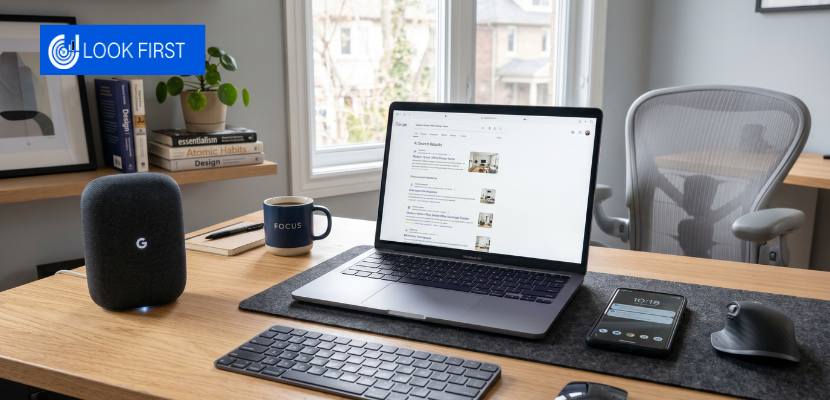
AI Overviews now appear in over 25% of Google searches, and voice search accounts for an increasing share of local queries. For businesses, this means two things: your content needs to be structured clearly enough for AI to cite it, and your local presence needs to be strong enough to surface in conversational, question-based searches.
The principles that win in AI search are the same ones that win in traditional SEO: genuine expertise, clear structure, authoritative sources, and content that answers real questions with real depth. Optimising for AI search is not a separate discipline; it is an extension of proper SEO.
How Long Does SEO Take to Work?
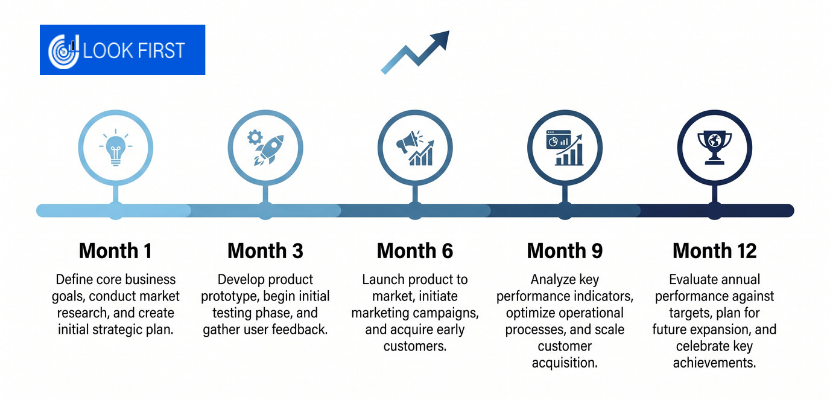
One of the most common questions about SEO, and one that deserves an honest answer. SEO is not a fast channel. It typically takes 6 to 12 months for new content to achieve stable rankings, and only 5.7% of all pages reach the top 10 within one year of publication.
The timeline for seeing meaningful results depends on several factors: the competitiveness of your target keywords, the current authority of your domain, the quality and consistency of your content, and the strength of your technical foundation.
What makes SEO uniquely valuable despite this timeline is its compounding nature. Unlike paid advertising, where traffic stops the moment a budget runs out, organic rankings, once earned, continue to deliver traffic and leads over months and years. The investment made today builds an asset that grows in value over time. This is a general timeline. If you want to learn about a monthly breakdown of SEO performance, read our full guide on SEO Timeline.
Common SEO Mistakes To Avoid
Targeting keywords without considering intent
Ranking for a keyword that does not match what your audience actually wants delivers traffic that does not convert. Always match content to the intent behind the search.
Ignoring technical SEO
Content and links are visible; technical issues are not. Many businesses invest heavily in content, while their website’s technical problems silently limit everything they publish.
Publishing thin content
Short, shallow articles that cover a topic superficially do not rank. Google consistently rewards depth, detail, and genuine expertise.
Building low-quality backlinks
Links from irrelevant or low-authority websites do not help and can actively harm rankings. Prioritise quality over quantity at every stage.
Expecting overnight results
SEO is a long-term investment. Businesses that abandon their strategy before it has had time to compound miss out on the channel’s most powerful characteristic: durable, growing returns over time.
Neglecting existing content
New content is not always more valuable than updated existing content. Updating a blog or article can lead to up to 146% growth in search traffic, making content maintenance a consistently high-ROI activity.
How Does SEO Work With Other Marketing Channels?
SEO does not operate in isolation. It works most effectively when integrated with the rest of your digital marketing strategy.
SEO and Content Marketing are inseparable; content is the vehicle through which SEO delivers results, and SEO ensures that content reaches the audience for which it was created.
SEO and Social Media are complementary; social media builds brand awareness and drives traffic that increases the brand signals Google uses as authority indicators. While social links are not direct ranking factors, the engagement and visibility they generate indirectly support organic performance.
SEO and Web Design are deeply connected; a well-designed, fast-loading, mobile-responsive website is a technical SEO requirement, not just a user experience preference. For a full breakdown of what makes a high-performing website, read: What Makes a Good Website Design?
SEO and Paid Search work in parallel: paid advertising delivers immediate visibility while organic rankings build, and the keyword data from paid campaigns informs and refines the organic strategy.
For the full picture of how SEO fits within web design, social media, and content marketing as a connected system, see our digital marketing guide for London businesses.
Ready To Take The Lead In SEO?
Every component covered in this guide requires consistent execution to deliver results. At Look First Marketing, we handle all of it, from technical audits and keyword research to content strategy, link building, and local SEO, built around your specific goals and market.
Ready to build a search presence that delivers real, long-term results? Explore our SEO services and speak to our team today.

Conclusion:
SEO is the most powerful long-term marketing channel available to businesses in 2026. It drives more traffic than any other digital channel, delivers returns that compound over time, and builds an asset, organic visibility that paid advertising can never replicate.
The businesses winning in search right now did not achieve that overnight. They built it systematically, with consistent attention to technical foundations, content quality, link authority, and local visibility. The gap between those businesses and those still relying on paid advertising and personal recommendations widens every month.
The fundamentals covered in this guide, keyword research, technical SEO, on-page optimisation, content strategy, link building, E-E-A-T, and local SEO, are the building blocks of every successful SEO campaign. Understanding them is the first step. Executing them consistently is what produces results.
FAQS
Neither is universally better; they serve different purposes. Paid advertising delivers immediate visibility but stops the moment your budget runs out, while SEO takes longer to build but delivers compounding returns that keep generating traffic at no extra cost once you rank. Most successful businesses use both together.
On-page SEO covers everything on your own website, content, keywords, headings, internal links, and page structure, while off-page SEO covers everything outside it, such as backlinks, brand mentions, and online reputation. Both are essential and work together.
Backlinks are links from other websites pointing to yours, and they remain one of the top three ranking factors in Google’s algorithm. When a reputable website links to your content, it signals to Google that your content is trustworthy and worth ranking.
E-E-A-T stands for Experience, Expertise, Authoritativeness, and Trustworthiness, the framework Google uses to assess whether a website deserves prominent rankings. It’s demonstrated through author credentials, quality backlinks, accurate content, and transparent authorship.
Social media is not a direct Google ranking factor, but it supports SEO indirectly by building brand awareness, driving traffic to your content, and increasing the brand signals Google uses as authority indicators.
Local SEO optimises a business’s online presence to rank in searches from a specific geographic area, such as “plumber near me” or “best café in Shoreditch.” Any business serving customers in a defined area needs it, since 76% of people who search for a local business on their phone visit one within 24 hours.
Small business SEO typically costs £500–£2,000 per month in the UK, depending on competition level and scope of work. Larger campaigns covering technical SEO, content, and link building at scale can run £2,000–£5,000+ per month.
SEO ranks a website in traditional Google search results through crawling, indexing, and ranking signals. GEO (Generative Engine Optimisation) gets that same content cited inside AI-generated answers from tools like ChatGPT and Google AI Overviews. GEO builds on the same foundations as SEO rather than replacing it.
The average first-page Google result contains around 1,447 words, but content over 3,000 words earns three times more traffic, four times more shares, and 3.5 times more backlinks than shorter content. Depth consistently outperforms brevity in competitive niches.