
What Makes a Business “Trustworthy” To Wood Green Shoppers Online?
Quick answer: A Wood Green business looks trustworthy online when it has a complete, accurate Google Business Profile, a steady flow of recent genuine reviews across multiple platforms, a website with clear trust markers, and consistent details everywhere it’s listed. These are the same signals that human shoppers notice and that AI tools like ChatGPT rely on when deciding whom to recommend.
A generation ago, trust in a Wood Green business grew slowly. A good experience got shared with a neighbour. A shopfront that had been open for years earned a kind of automatic credibility just by still being there.
That still matters, but it now happens after the online decision, not before it. By the time someone walks through your door, they’ve usually already decided you’re worth trying, based entirely on what they saw on a screen a few minutes earlier.
This shift hits harder in a place like Wood Green than it would in a quiet residential street. Between the shopping centre and the constant flow of people through the Piccadilly Line station, a huge portion of potential customers are seeing your business for the first time, often while comparing you against two or three others on their phone at the same moment.

What Are The Core Signals That Actually Build Online Trust
Not everything that looks like effort actually moves the needle. Some signals carry far more weight than others, both with shoppers and with the systems that rank or recommend your business. Our full breakdown of Google Business Profile ranking factors covers the technical side in greater depth if you want to go beyond the basics below.
Review Recency Matters More Than Volume
Ten reviews from the last two months read as more trustworthy than fifty reviews sitting there from three years ago. A pile of old reviews with nothing recent tells a customer, fairly or not, that the business might not be quite what it used to be.
Shoppers consistently say recent reviews matter more than old ones when deciding whether to trust a business; this is one of several local SEO signals that’s easy to overlook because it’s ongoing rather than a one-time fix. Even a handful from the last couple of months tends to outweigh a large batch with nothing new added in years.
Owner Responses Signal An Active Business
Responding to reviews, especially the negative ones, often does more for trust than avoiding negative reviews altogether. A thoughtful reply shows that a real person is behind the business and that they actually care about what happens after the sale.
A defensive or dismissive response, on the other hand, can undo the goodwill from a dozen good reviews. The tone matters as much as the fact that you replied at all.
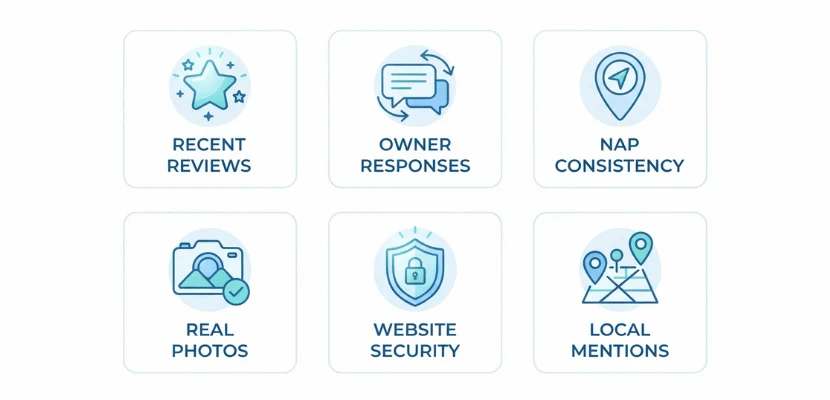
NAP Consistency Across Every Platform
NAP stands for name, address, and phone number, and it needs to match exactly across all places your business appears online. That includes your website, your Google Business Profile, old directory listings you’d forgotten existed, and your social media bios.
Mismatches are more common than most business owners realise. A business that moved premises two years ago but never updated an old Yell listing is quietly telling Google that the listing might be unreliable.
Reviews Beyond Google Matter Too
Google reviews get most of the attention, but a business that also has a presence on Trustpilot, Yell, or Facebook, with reviews that broadly agree with each other, reads as more credible than one relying on a single platform. It also gives customers who don’t trust Google reviews alone somewhere else to check.
Real Photos Beat Polished Stock Images
Genuine, recent photos of your actual shop, staff, or products consistently outperform stock imagery, even when the stock photos look objectively nicer. Shoppers can usually tell the difference, and so can Google, in its own way.
Why Your Website Needs To Carry Its Own Trust Signals
A business’s website needs its own trust markers, a working contact page, a secure connection, and a genuine About page, or it can quietly undo the trust a strong Google Business Profile just built.
- A visible, working contact page with a real address and phone number
- A secure connection (the padlock icon, meaning the site has an SSL certificate)
- A genuine About page, not a single vague paragraph
- A privacy policy, even a simple one, since its absence can quietly raise doubts
How Google Itself Measures Trustworthiness
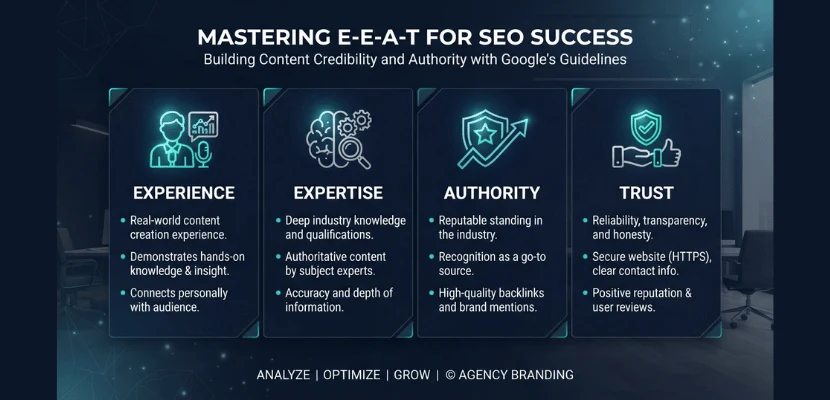
Google has a public framework for judging quality content and businesses, known as E-E-A-T: Experience, Expertise, Authoritativeness, and Trustworthiness. Google’s own Search Central documentation on quality rater guidelines makes clear this applies to any business publishing information online, not just large publishers.
Experience And Expertise Aren’t Just For Big Brands
For a local business, experience might show up as genuine before-and-after photos, specific details about how a job was done, or a case study mentioning an actual local street or landmark rather than vague claims. Specificity reads as real experience. Generic marketing language reads as the opposite.
Authoritativeness Comes From Being Mentioned Elsewhere
If other reputable local sites, directories, or even a local news mention reference your business, that builds authority in Google’s eyes. It doesn’t need to be complicated. A mention on a genuine North London business directory carries more weight than ten low-quality, unrelated backlinks ever will.
Why AI Tools Weigh Trust Signals Differently
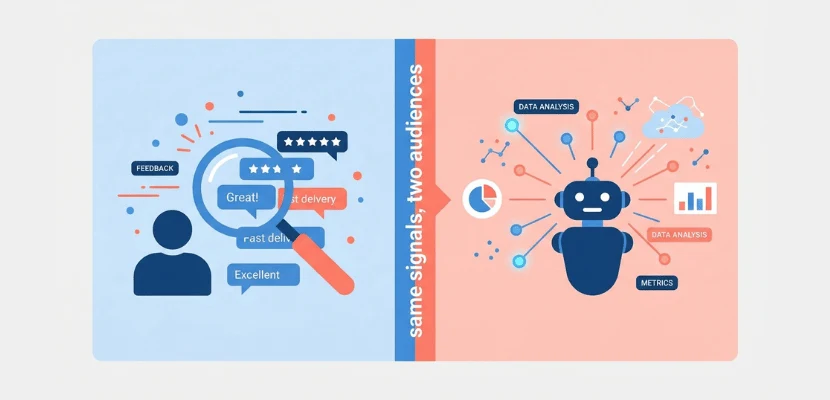
When someone asks ChatGPT or Google’s AI Overviews to recommend a business in Wood Green, the AI isn’t forming its own opinion out of thin air. It’s pulling together the same signals mentioned above: reviews, consistency, clarity, and deciding how confidently it can describe your business.
AI Tools Skip Vague Listings Entirely
A business with thin, inconsistent, or outdated information doesn’t just rank lower in AI search results; it often gets left out of the recommendations altogether. There’s nothing clear enough for the AI to summarise with confidence.
This is the idea behind AI Optimisation (AIO), structuring a business’s online presence so these signals are clear enough for an AI system to read, verify, and pass along to a customer asking for a recommendation.
Structured data, often called schema markup, also plays a quiet but important role here. It’s a piece of code added to a website that spells out exactly what a business is, where it’s based, and what it offers, in a format that both search engines and AI tools can read instantly, rather than having to guess.
Traditional Trust Signals vs AI Trust Signals
| Signal | Matters for human shoppers | Matters for AI recommendations |
|---|---|---|
| Recent reviews | Builds confidence, feels current | Confirms the business is active and real |
| Owner responses | Shows a business that cares | Adds context AI can summarise accurately |
| NAP consistency | Avoids confusion over the right details | Confirms which listing is authoritative |
| Real photos | Builds emotional trust and familiarity | Limited direct impact, supports profile completeness |
| Website trust markers | Reassures a visitor they’ve reached a real business | Rarely checked directly, but supports overall credibility |
| Local mentions | Adds a sense of local reputation | Strengthens authority signals AI can reference |
What This Looks Like For A Wood Green Business Specifically
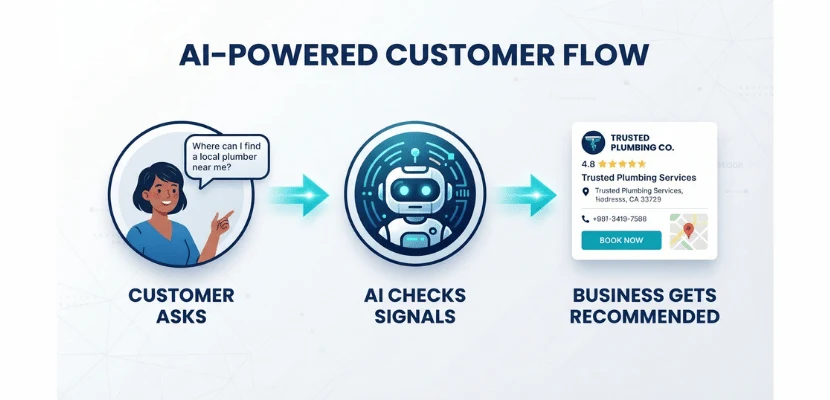
Wood Green’s mix of destination shoppers and passing transit traffic means trust often has to be established in a single glance. Someone deciding between your shop and the one next to it, or deciding whether to trust an AI’s suggestion enough to act on it, doesn’t have long to make up their mind.
For a business in a quieter, more residential area, weaker trust signals might get forgiven because repeat, considered custom fills the gap. In Wood Green, with this much competition packed into one area, the basics matter more, not less.
Working with a digital marketing agency in Wood Green that treats trust signals as a specific, measurable part of a wider local SEO strategy tends to close this gap faster than tackling reviews and listings one at a time. Through our GEO services in London, we’ve seen this pattern repeat across nearly every North London area we work in; trust signals and AI visibility move together, not separately.
A Simple Trust Audit You Can Run This Week
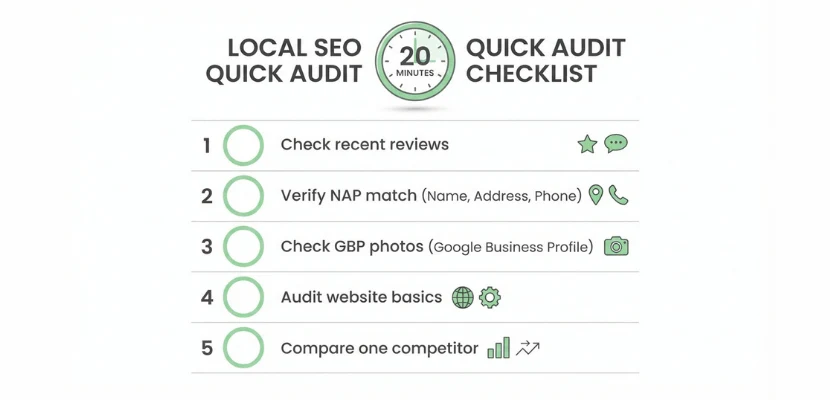
You don’t need a consultant to spot the obvious gaps. Set aside twenty minutes and work through this:
- Check your last five reviews: are any from the last month, or are they all older than six months?
- Search for your business name and check three different listings (Google, a directory, social media). Do the address and phone number match exactly?
- Look at your Google Business Profile photos; are they genuinely recent, or from years ago?
- Open your own website and check for a working contact page, visible padlock icon, and a real About page.
- Search for one nearby competitor and compare their profile completeness against yours.
Most businesses find at least one gap in under twenty minutes. That’s usually the quickest, cheapest fix available.
Conclusion
Trust used to take years to build on a Wood Green high street. Now it’s assembled from a handful of specific, verifiable signals: recent reviews across multiple platforms, consistent details, a website that backs up what your listing promises, and a profile clear enough for both humans and AI tools to trust at a glance.
The businesses winning here aren’t necessarily the biggest or the longest established. They’re the ones where every online signal quietly confirms what a good business should look like, whether a customer is scrolling Google or asking an AI assistant for a recommendation.
If you’re not sure where your own gaps are, a free audit from a trusted digital marketing agency like Look First Marketing will show you exactly which trust signals are working, and which ones are quietly costing you customers.
FAQ'S
Yes. AI tools like ChatGPT and Google AI Overviews weigh review volume, recency, and overall sentiment when deciding which local businesses to describe as reliable, much like a person would read reviews before choosing where to go.
There’s no fixed number that guarantees trust, but a steady stream, a handful of genuine reviews most months, reads as far more credible than a large batch collected years ago with nothing recent added since.
It helps. A thoughtful, calm response to a negative review often builds more trust than having no negative reviews at all, since it shows the business is actively managed and willing to address problems honestly.
Yes. Strengthening every other signal, accurate details, real photos, an active social presence, and consistent information, helps a new business look credible while genuine reviews build up naturally over the following months.
Yes. A strong profile can bring someone to your site, but a website missing basic trust markers, like a real contact page or a secure connection, can undo that trust the moment they click through.