
How to Improve Google Business Profile Ranking: A Complete Guide
To improve your Google Business Profile ranking, complete every section of your profile, keep your name, address, and phone number consistent across all online listings, build a steady flow of genuine reviews, post updates regularly, and add fresh photos each month. These signals feed directly into the three factors Google uses to rank local results: relevance, distance, and prominence.
Most business owners find out their Google Business Profile has a problem the hard way. The phone stops ringing as much as it used to, or a competitor two streets away suddenly sits above them in the map results, despite offering less and charging more.
The frustrating part is that Google rarely explains why. There is no email that says “you dropped from position two to position seven because of X.” You are left guessing, and most guesses are wrong.
This guide strips out the guesswork. It walks through exactly how to improve Google Business Profile ranking using the same levers Google itself has confirmed matter, backed by what actually moves the needle in practice, not just in theory.
By the end, you will know how to fix the basics properly, which signals deserve your time first, and how to keep your ranking stable once you get there.
What Determines Google Business Profile Ranking In 2026?
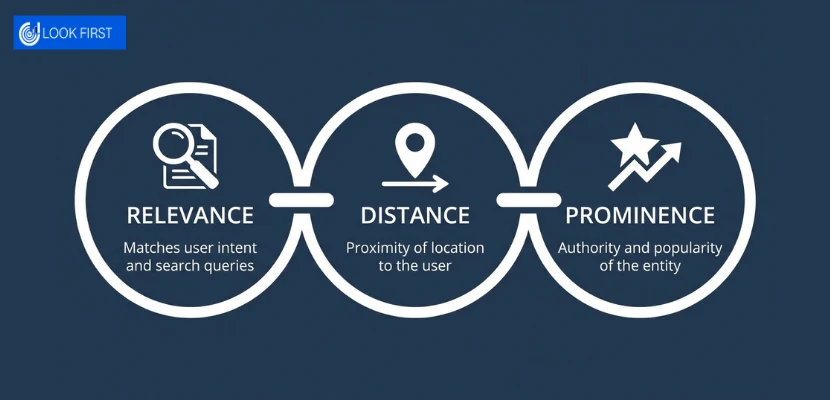
Google has been fairly consistent about this one thing for years: Google’s local ranking factors come down to three things working together. Relevance, distance, and prominence.
Relevance
This is about how well your profile matches what someone typed or said. If a searcher looks for “emergency plumber,” a profile that lists only “plumbing services” as a generic category, with no mention of emergency callouts, is working against itself.
Relevance is not just about categories either. Google reads your business description, your list of services, your posts, and even your review content to build a fuller picture of what you actually do.
Distance
Distance measures how close a business is to the location implied in the search, whether that is a specific address typed into the query or the searcher’s actual physical location. You cannot change where your office sits, but you can influence how Google interprets your service area, particularly if you serve customers across a wider region than your registered address suggests.
Prominence
Prominence is the wildcard most businesses underestimate. It covers how well-known and well-regarded a business is, both on Google and across the web generally. Review count, review quality, backlinks, press mentions, and overall online authority all contribute to this.
A business with 200 reviews at 4.8 stars and consistent citations across the web is, all else being equal, going to out-rank a nearly identical business with 12 reviews and a Facebook page that hasn’t been updated since 2021.
How AI Overviews Are Changing Local Visibility?
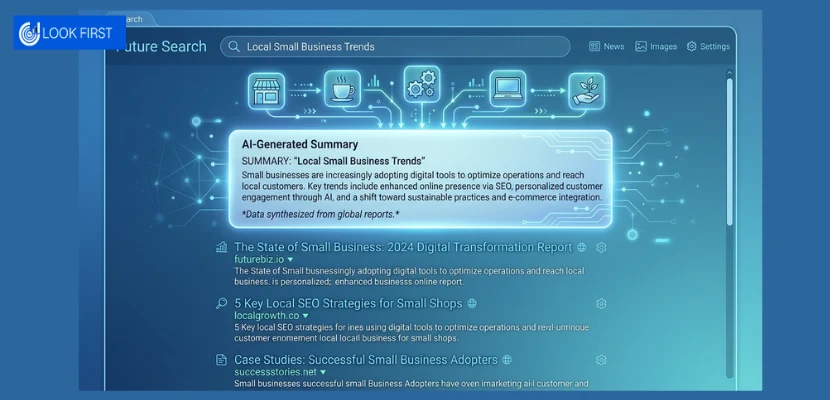
Something worth flagging for 2026 specifically: a growing share of local queries now surface an AI-generated summary before the traditional map pack even appears. These summaries tend to pull from businesses with clear, well-structured information, strong review sentiment, and FAQ content that directly answers common questions.
In practice, this means the businesses winning in 2026 are not just optimising for the map pack. They are structuring their online presence so an AI system can easily lift accurate, positive information about them, which is exactly what generative engine optimisation focuses on.
This shift is worth understanding properly rather than treating it as a footnote, since the ways AI-driven search is reshaping visibility are more complex than we have room for here.
How To Improve Google Business Profile Ranking?
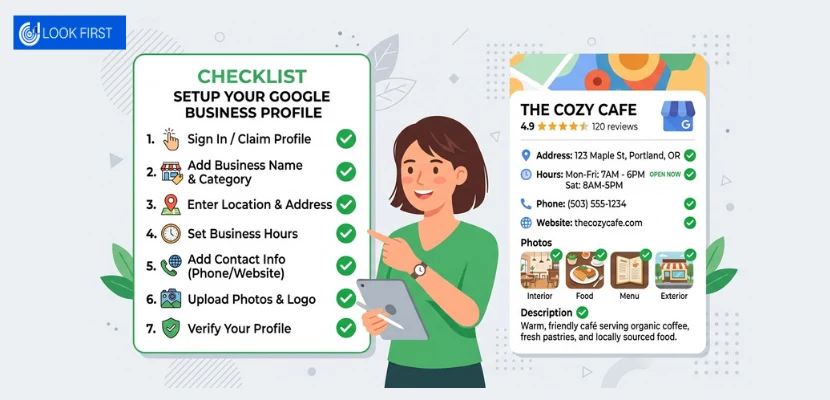
Complete and Optimise Every Section of Your Profile
An incomplete profile is the single most common reason a business underperforms. Google has said publicly, and independent studies back this up, that businesses with complete profiles are significantly more likely to be considered reputable by users and by the algorithm itself.
Business Name Rules
Keep this simple. Use your actual registered business name, exactly as it appears on your signage and website. Adding keywords like “Best Roofers London” into your business name field goes against Google’s guidelines for representing your business and can result in a suspension, which is far more damaging than any short-term ranking gain.
Choosing the Right Primary Category
Your primary category carries more ranking weight than most people realise. Two businesses offering identical services can perform very differently in the local pack purely because one chose “Roofing Contractor” and the other chose the vaguer “Contractor.”
A quick way to check this: search for your main service term plus your city, then look at the categories the top 3 results use. You can see this by clicking into their profile. Match or beat that specificity.
Secondary Categories
Add secondary categories that genuinely apply, but resist the urge to tick every box available. Piling on categories that only loosely relate to your business dilutes relevance rather than strengthening it.
Attributes, Description, and Services
Fill in every attribute Google offers: wheelchair access, women-led business, appointment required, whatever genuinely applies. Write a business description that reads naturally and mentions your core services and location without stuffing keywords into every sentence.
The services section deserves more attention than most businesses give it. List each service individually, with a short, genuinely useful description rather than a single line that covers everything.
Hours Accuracy
Keep opening hours up to date, including holiday and special hours. Google actively surfaces “closed now” businesses lower in results, and an inaccurate hours listing is one of the fastest ways to lose a customer who was ready to visit.
What Is NAP Consistency And Local Citations?
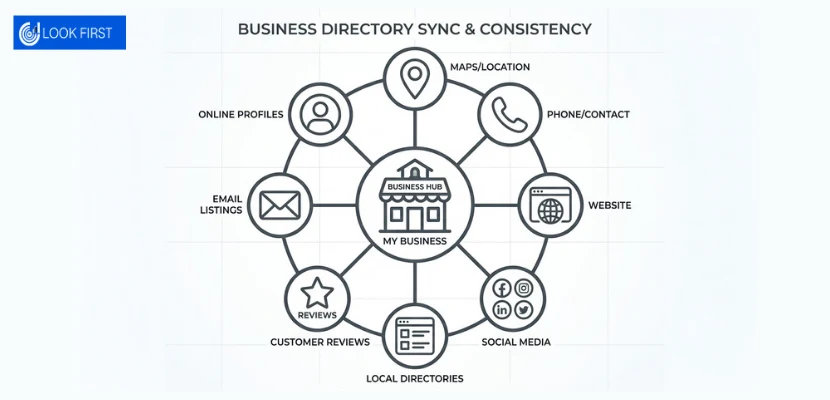
NAP stands for name, address, and phone number. It sounds basic, but inconsistency here quietly undermines prominence more than most business owners expect.
If your business is listed as “J Smith Plumbing Ltd” on your website, “J Smith Plumbing” on Yell, and “James Smith Plumbing Services” in a trade directory, Google struggles to confidently confirm that all of these refer to the same business.
Research on local ranking factors consistently places NAP consistency and citation accuracy among the top factors practitioners believe matter most, alongside review signals and on-page optimisation.
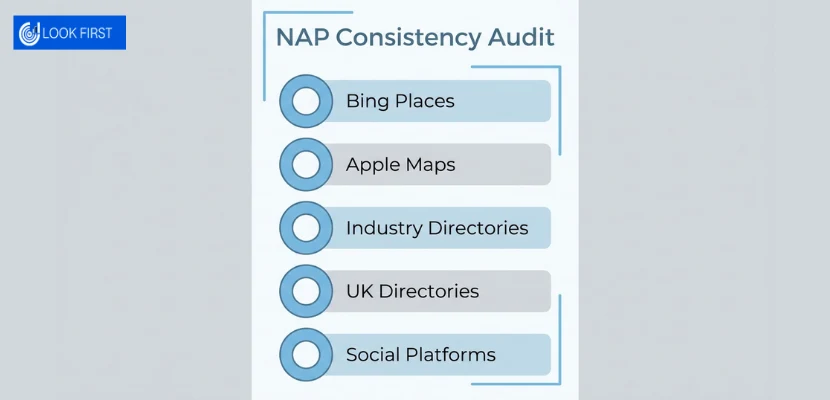
Where to check and fix citations:
- Bing Places
- Apple Maps Connect
- Industry-specific directories relevant to your trade
- Yell, Thomson Local, and other established UK directories
- Facebook and other social platforms where your address appears
Go through each one, correct any mismatches, and remove duplicate listings entirely rather than leaving old, outdated ones live alongside a newer profile.
Reviews: The Most Overlooked Ranking Lever
If there is one section of this guide worth reading twice, it is this one. Reviews influence relevance, prominence, and even conversion once someone finds you. See our full breakdown of local SEO ranking factors for exactly how much weight reviews carry compared to everything else.
Why Count, Recency, and Velocity Matter?
It is not simply about having more reviews than your competitor. Google appears to weigh recency heavily, meaning a steady flow of new reviews matters more than a large historic pile that stopped growing two years ago.
Velocity, the rate at which reviews come in, also seems to matter. A business that consistently collects three or four reviews a month tends to hold its position better than one that gets a burst of twenty reviews, then nothing for six months.
Asking for Reviews Ethically
Under Google’s prohibited and restricted content policy, incentivised reviews, gating (only asking happy customers), and review swaps are explicitly banned. What works instead is far simpler and safer long-term:
- Ask in person at the natural end of a job or service
- Send a follow-up text or email with a direct review link
- Add a review request to invoices or completion paperwork
- Train staff to mention it naturally rather than scripting something robotic
Responding to Reviews
Every review deserves a reply, good or bad. A thoughtful response to a negative review often does more for trust than ten generic five-star reviews with no reply at all, because prospective customers read how a business handles criticism.
When responding to a negative review, acknowledge the specific issue, avoid getting defensive, and offer to resolve it offline if appropriate. Never argue publicly, even if the reviewer is factually wrong.
Recovering From a Damaging Review
If a single bad review or a sudden drop in rating is hurting visibility, the fix is rarely to fight the review itself. It is to outweigh it with a fresh, genuine flow of new positive reviews, which naturally pushes the damaging one further down and dilutes its overall impact on your average.
What Are Photos, Videos, And Visual Engagement Signals?
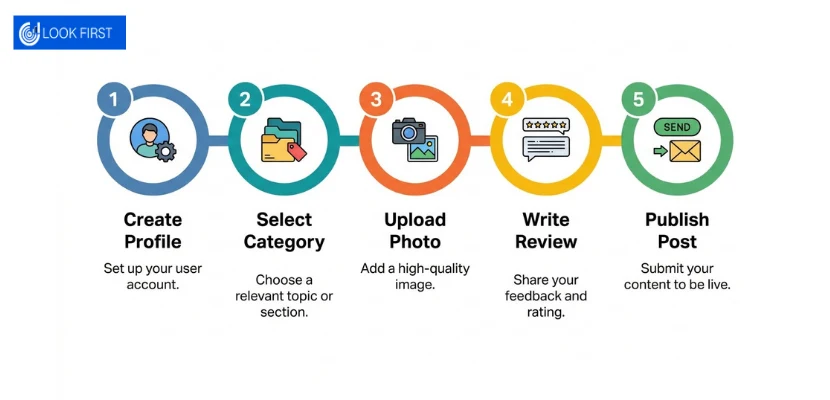
Profiles with photos receive substantially more requests for directions and website clicks than those without, according to Google’s own guidance for businesses. The exact multiplier varies by industry, but the direction is consistent across every study on this.
Photo Types That Matter Most
- A clear, well-lit cover photo showing the storefront or work van
- Team photos that put a human face to the business
- Before-and-after images for trade businesses specifically
- Genuine customer-facing shots rather than stock imagery
Update Frequency
Add new photos monthly at minimum. A profile with the same six photos as three years ago signals inactivity to both users and, indirectly, to Google.
Video’s Growing Role
Short vertical video content, a quick walkthrough of a completed job or a thirty-second introduction from the owner, is increasingly common on strong-performing profiles. It is not yet essential everywhere, but in competitive trade and hospitality niches it is becoming a genuine differentiator.
Using Google Posts And The Q&A Section Strategically
Post Types Worth Using
Google Posts function a little like a mini social feed attached to your profile. Offers, updates, and event posts all have their place, but the ones with genuine substance tend to outperform generic “we’re open” updates.
Posting Frequency
Once or twice a week is a sensible cadence for most small businesses. Posting daily rarely adds proportional benefit and can start to look automated rather than genuine.
Managing the Q&A Section
Most business owners ignore this section entirely, which leaves the door open for random users to answer questions on their behalf, sometimes incorrectly. Seed the Q&A with the five or six questions customers most often ask, and answer them clearly as the business owner.
On-Site SEO That Reinforces Your GBP
Your Google Business Profile does not operate in isolation. Google cross-references it against your actual website to build trust and confirm accuracy.
Aligning Website Content With GBP Categories
If your primary category is “Paving Contractor,” your website should clearly and prominently reflect paving services, not bury them under a generic “landscaping” umbrella term that dilutes the match.
LocalBusiness Schema Markup
Adding structured LocalBusiness schema to your website gives search engines a clean, machine-readable version of your NAP details, opening hours, and service area. This does not directly boost ranking on its own, but it removes ambiguity that can otherwise work against you.
Location Pages
Businesses serving multiple towns or cities benefit from dedicated, area-specific pages rather than a single generic “areas we cover” page. Duplicate or thin location pages tend to do more harm than having no location pages at all.
Why Local Link Building And Community Signals matter?
Backlinks matter for GBP prominence in much the same way they matter for traditional website SEO, just with a stronger local flavour.
Sources worth pursuing:
- Local news coverage of community involvement or notable projects
- Sponsorships of local sports teams or events
- Partnerships with complementary local businesses (a landscaper and a paving contractor, for example)
- Trade association memberships that offer a directory listing with a backlink
- Chamber of Commerce membership
These signals build slowly, but they compound. A business with five years of consistent local mentions across the web tends to hold rankings far more securely than one relying purely on on-page fixes.
Case Study: A Real-World GBP Ranking Turnaround
Asador Bar & Grill, a halal steakhouse in Leicester Square, London, is a good example of how far consistent GBP and local SEO work can take a business, even in one of the most competitive dining postcodes in the country. Here is how our digital marketing consultants in London helped turn things around.
Starting position:
- Monthly website visits sitting at just 1.5K
- Only 270 keywords ranking
- A site authority score of 10
- Customers searching for “halal steakhouse Leicester Square” were finding competitors, not Asador
- Traffic was coming almost entirely from people who already knew the name, rather than new customers discovering them
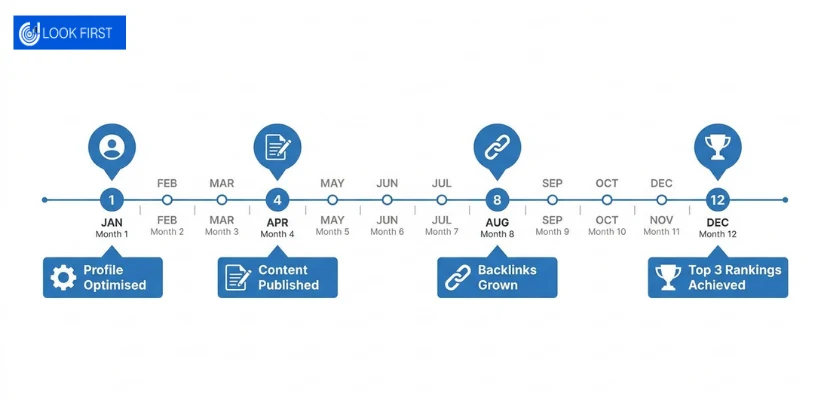
The approach taken, over 12 months:
- Fully optimised the Google Business Profile itself: menu content, categories, photos, Q&A, and consistent NAP across every citation
- Shifted keyword focus away from branded search terms towards high-volume discovery terms people actually search when looking for somewhere to eat
- Published five high-quality articles a month targeting long-tail and informational queries to build topical authority around the cuisine and location
- Grew referring domains from 117 to 519, building genuine site authority and trust signals
- Structured content specifically so it could surface in Google’s AI Overviews, now visible for 436 keywords
Results after 12 months:
- Monthly visits grew from 1.5K to over 20K
- GMB interactions rose by 309% month on month
- GMB menu views increased by 890% year on year
- The business now holds top-3 rankings across its core Leicester Square and halal steakhouse search terms
Key takeaway:
The biggest gains came from treating GBP optimisation and the wider content strategy as a single, connected system rather than as separate tasks. Fixing the profile brought Asador back into local contention, but sustained content and backlink work pushed it into genuinely dominant rankings. You can see more case studies like this from other clients we have worked with.
Why Tracking Performance With GBP Insights And Search Console Matters?
GBP Insights shows calls, direction requests, website clicks, and how customers found the listing, whether through direct search, discovery search, or branded search. Discovery search growth is usually the clearest sign that ranking and visibility are genuinely improving, since it reflects people finding you without already knowing your name.
Pair this with Google Search Console to see which local queries are driving impressions to your website, and check whether those align with what your GBP is currently optimised for.
A sensible cadence is a monthly review: reviews received, ranking position for two or three tracked terms, and any citation or NAP issues that have crept back in. If you are not sure where to start, a proper local SEO audit will map out exactly which of these areas needs attention first.
What Are The Common Mistakes That Quietly Hurt Your Ranking?
| Mistake | Why It Hurts | Simple Fix |
|---|---|---|
| Keyword stuffing the business name | Violates guidelines, risks suspension | Use the exact registered name only |
| Ignoring the Q&A section | Lets unverified answers sit publicly | Seed and monitor it monthly |
| Inconsistent NAP across directories | Undermines trust and prominence | Audit and correct quarterly |
| Treating GBP as set and forget | Signals inactivity over time | Post, add photos, and respond monthly |
| Category stuffing | Dilutes relevance | Choose the most specific, accurate categories only |
Scaling GBP Strategy For Multi-Location Businesses
Avoiding Location Cannibalisation
When two profiles for the same brand serve overlapping areas, they can end up competing against each other rather than the actual competition. Each location profile needs genuinely distinct content and, ideally, distinct service emphasis where relevant.
Centralised vs Decentralised Review Management
Larger multi-location businesses tend to do better with a centralised review monitoring process, even if individual locations handle the actual customer relationship. This keeps the response tone and speed consistent across all branches.
Bulk Management Tools
For businesses managing five or more locations, a bulk management platform quickly becomes worth the cost, purely from a time-saved perspective for updates, posts, and review monitoring across every profile.
Conclusion
Improving Google Business Profile ranking is not about finding one clever trick. It comes down to relevance, distance, and prominence working together, built through a genuinely complete profile, a steady and honest review process, consistent citations, and regular activity that shows Google and your customers that the business is active and trustworthy.
The case study above shows this in practice. Small, consistent fixes applied in the right order moved a business from invisible to position 2 in under half a year, without a single paid ad.
None of this requires guesswork once you know what actually matters. It requires consistency, applied over months rather than days. See our complete SEO guide for how GBP work fits into your wider SEO strategy.
Ready To See Where Your Profile Stands?
If you are unsure which of these areas is holding your ranking back, a proper GBP audit from Look First Marketing will show you exactly where the gaps are, from category selection through to citation consistency. As a digital marketing agency in London, we work with businesses across the capital to turn this kind of profile audit into genuine ranking gains. Get in touch for a free local SEO review, delivered by our team offering local SEO services in London, and find out what is genuinely worth fixing first.
FAQ'S
Focus on completing every profile section accurately, building a steady flow of genuine reviews, keeping your name, address, and phone number consistent across all online platforms, and posting updates regularly. Ranking improves through consistency across these areas rather than any single quick fix.
Google confirms three core factors: relevance (how well your profile matches the search), distance (proximity to the searcher or search location), and prominence (your overall reputation and authority, built through reviews, citations, and backlinks).
Posting regularly signals an active, well-maintained profile and can support relevance and engagement, though it is not a standalone ranking factor. Combined with strong reviews and complete profile information, consistent posting meaningfully supports overall visibility.
There is no fixed number, since it depends on your local competition. As a general benchmark, aim to match or exceed the review count and average rating of the businesses currently ranking above you in your specific area.
Common causes include a competitor gaining fresh reviews, an inconsistent NAP citation appearing somewhere new, a lapse in posting or photo updates, or a policy violation flag. Check GBP Insights and recent citation changes first.